Smile Dent Team: a brand audit of a dental clinic
A brand audit of a dental clinic starts by choosing the public and the four perspectives. A team from group SMK260 is measuring the Smile Dent Team brand with ACM Framework, over one semester.
Grupa SMK260, Universitatea de Stat din Moldova
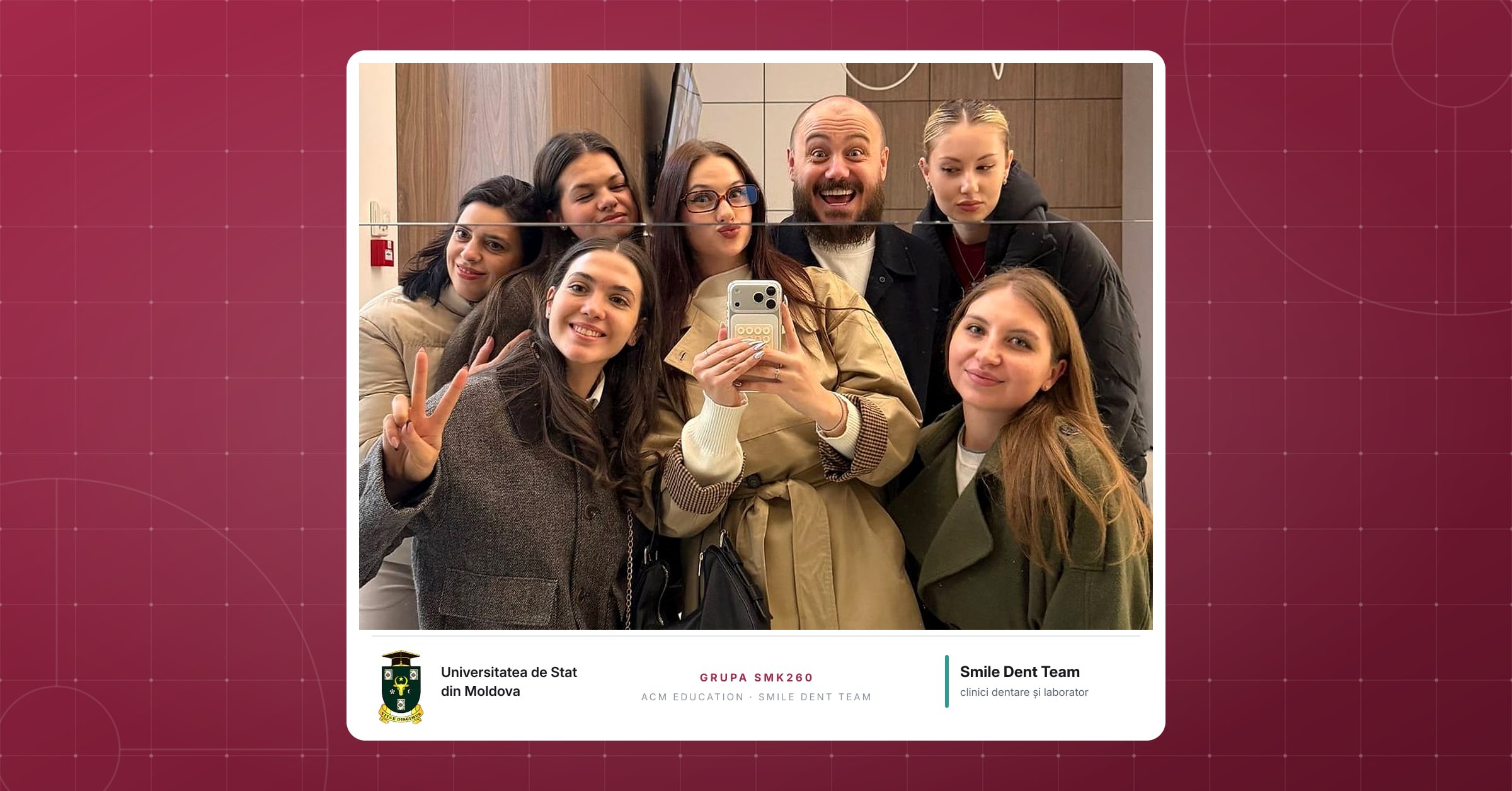
A brand audit of a dental clinic begins with a simple decision that is easy to skip: who we measure for. Then come the four perspectives (what leadership believes, what the clinic publishes, what patients expect from a good clinic and how they see it) and the distances between them. A team of five master's students from group SMK260 at Moldova State University (USM) is now applying the Archetypal Coherence Matrix (ACM Framework) to Smile Dent Team, over one semester.
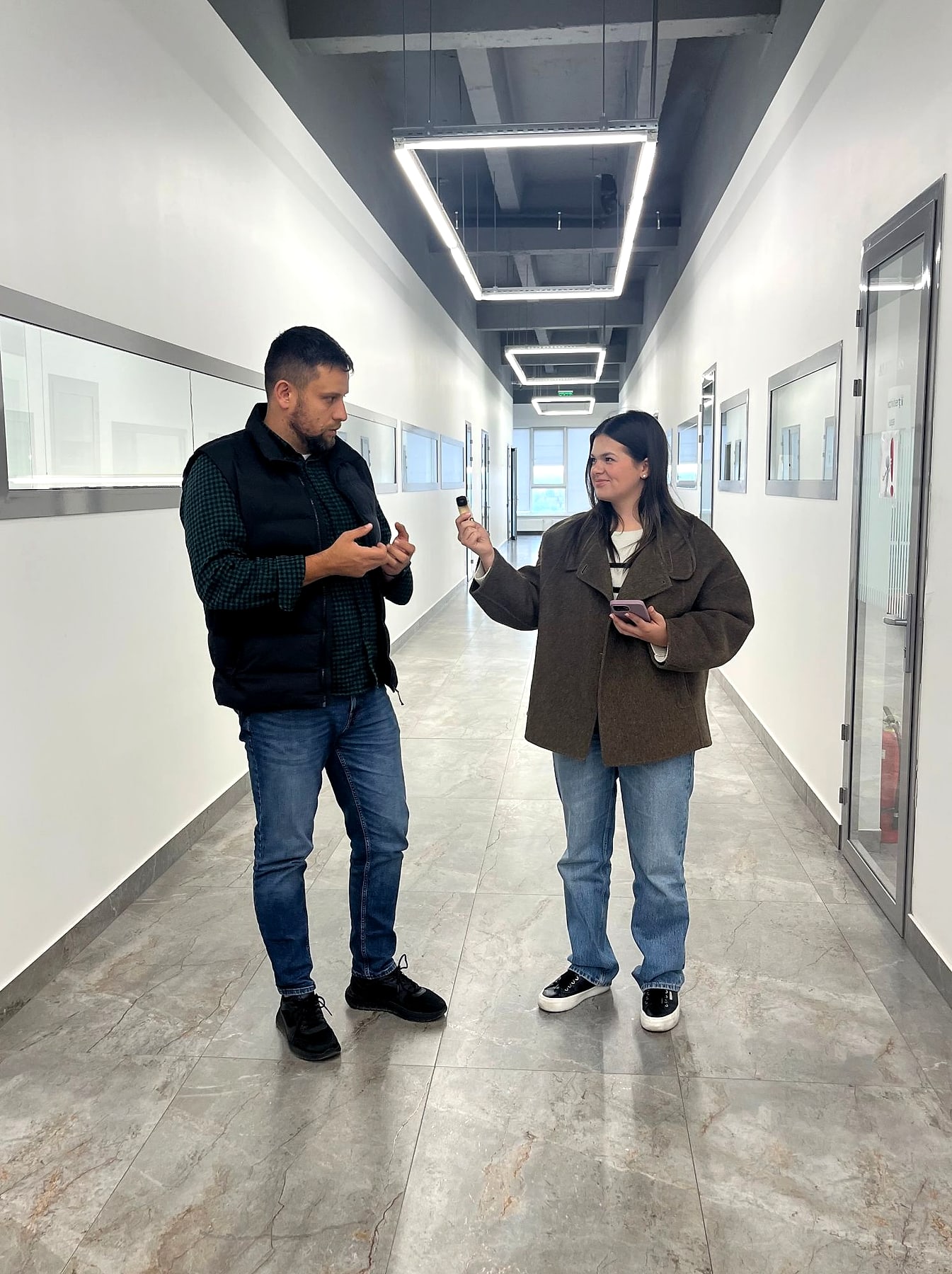
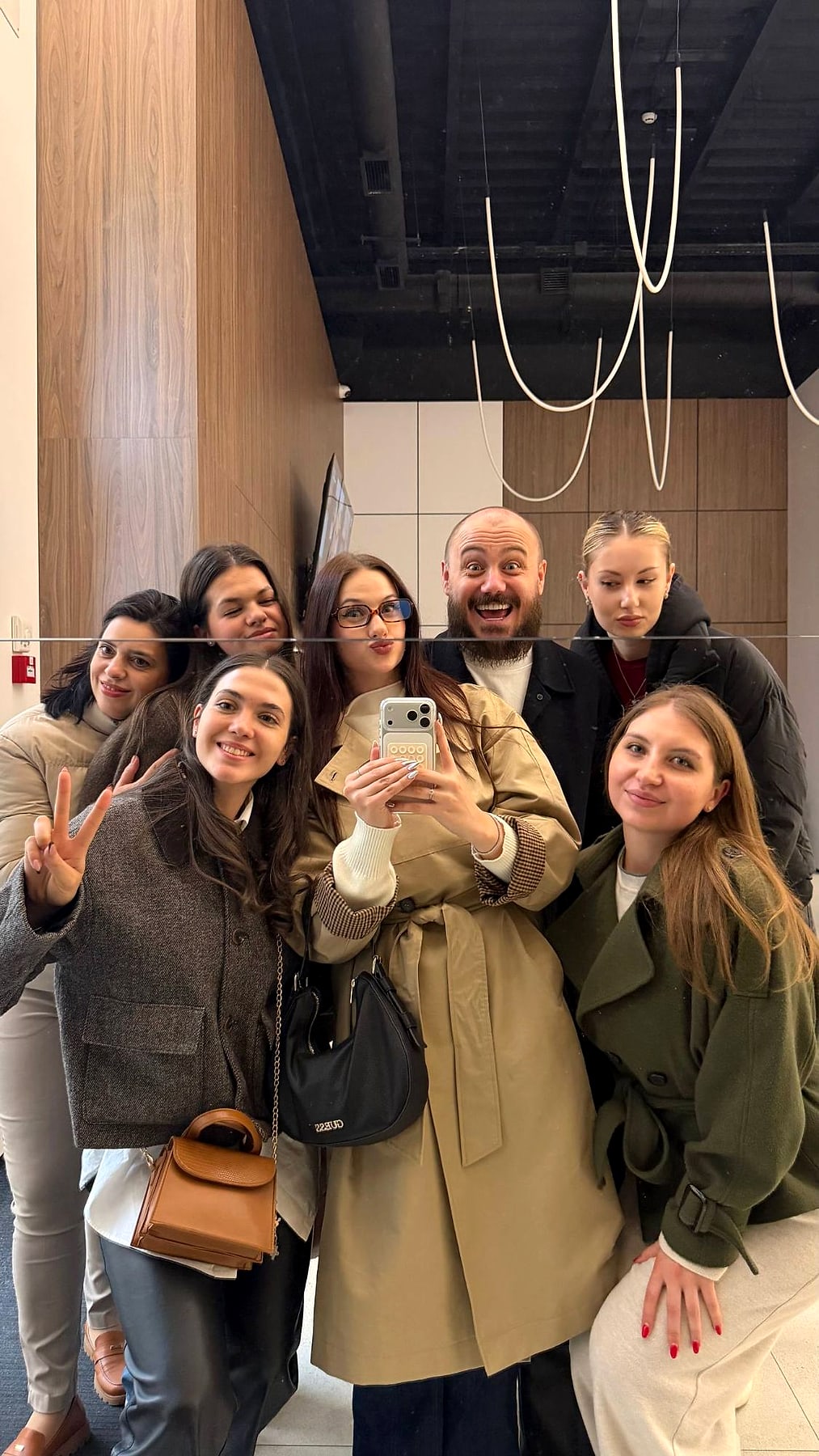
The collaboration began with a visit to the company's laboratory, where the support work for the clinics is done. The meeting brought together the marketing director, the head of the laboratory, the course lecturer and the team that will measure the brand. Below: what we observed and what comes next.
01How does a brand audit of a dental clinic begin?
With people, materials and the public, not with a conclusion. First you settle who answers from leadership and staff, then the list of channels the clinic publishes on, then the public that will be asked. At Smile Dent Team, the visit opened the project; next come the leadership survey, the coding of published materials and the patient survey.
02What is Smile Dent Team?
A network of dental clinics with its own laboratory. According to the company's presentation piece published by Forbes Moldova in May 2026, Smile Dent Team has 10 clinics in the Republic of Moldova, Romania and Italy, has treated more than 60,000 patients, works with more than 600 specialists and runs its own dental laboratory of more than 1,200 m². These are figures stated by the company. They say how big the clinic is; they do not say how patients see it.
03What did we learn at the laboratory?
The head of the laboratory and the marketing director described the same brand from two places. From the laboratory, the brand is built from people, from the place they work in and from technology: a good workplace and access to new techniques keep processes efficient and products improving. From marketing, the job is to carry those values to the public: to tell the story behind the work, to show what the patient gains and to build a relationship of trust. The measurement will show whether the two descriptions reach the patient in the same way.
04What will we measure at Smile Dent Team?
Four images of the same clinic, on the same 12 archetypes. We call them the four perspectives of a brand:
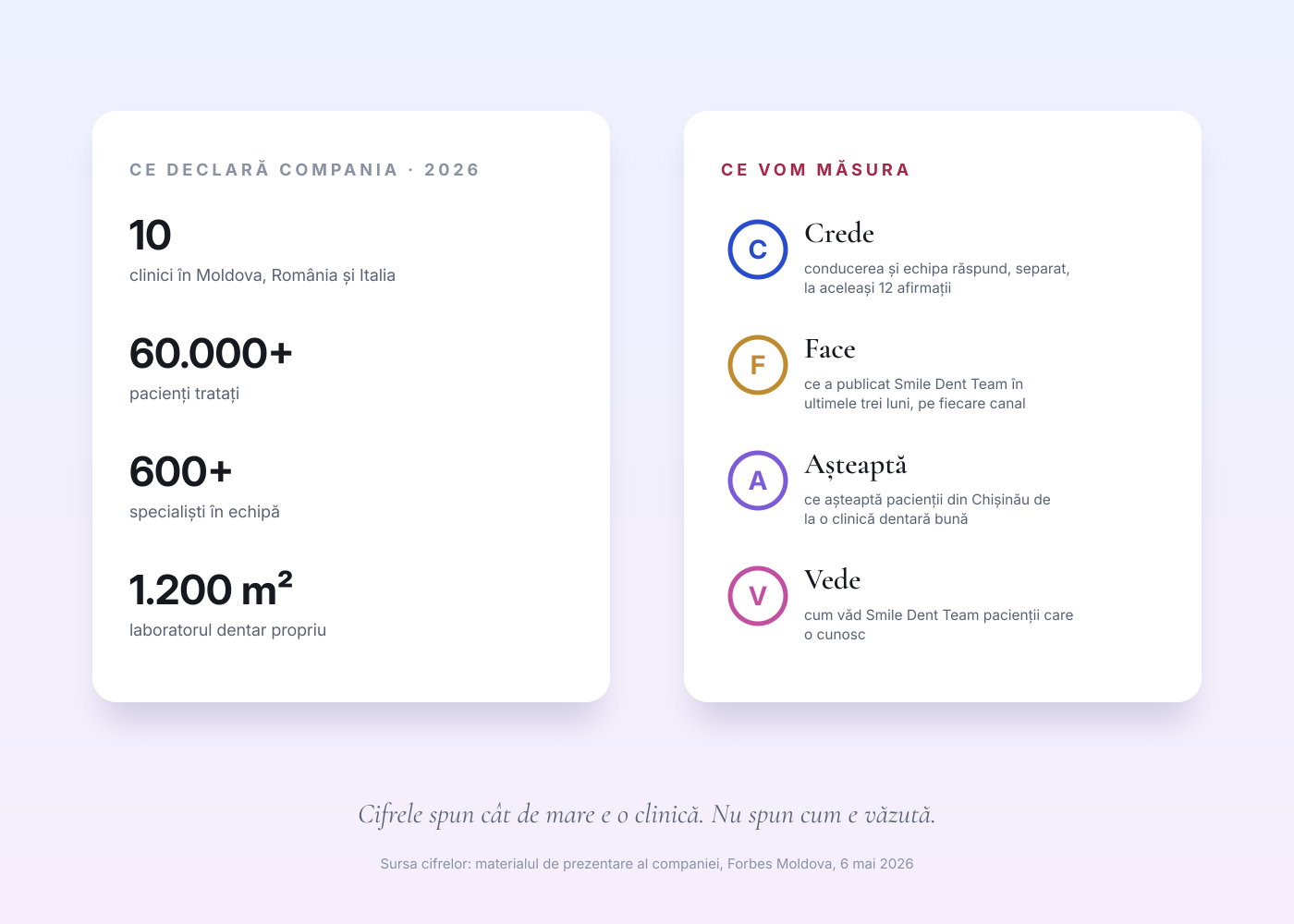
- Believes: leadership and staff each answer the same 12 statements about the brand separately; the shared profile comes from them, along with how closely the insiders agree.
- Does: we code what Smile Dent Team published in the last three months, on each channel; we learn what brand comes through in its posts, not what the company intends.
- Expects: we ask patients and prospective patients in Chișinău what they expect from a good dental clinic, before any name is mentioned.
- Sees: we ask those who know Smile Dent Team how they see it, on the same 12 archetypes; only them, because someone who does not know the clinic has nothing to describe.
Why six distances from four perspectives? Because the perspectives are compared two at a time, and four elements make six pairs: Believes with Does, Does with Sees, Believes with Sees, Expects with Sees, Does with Expects, and Believes with Expects. Each pair has its own name, explained in the article on the six gaps. Together they show whether what the clinic believes reaches what it publishes, whether what it publishes reaches the patient, and whether the patient gets what they expect from a good dental clinic. It is not a grade or a final classification: it is a snapshot with checkable figures.
05Who do we measure for: patients or partner clinics?
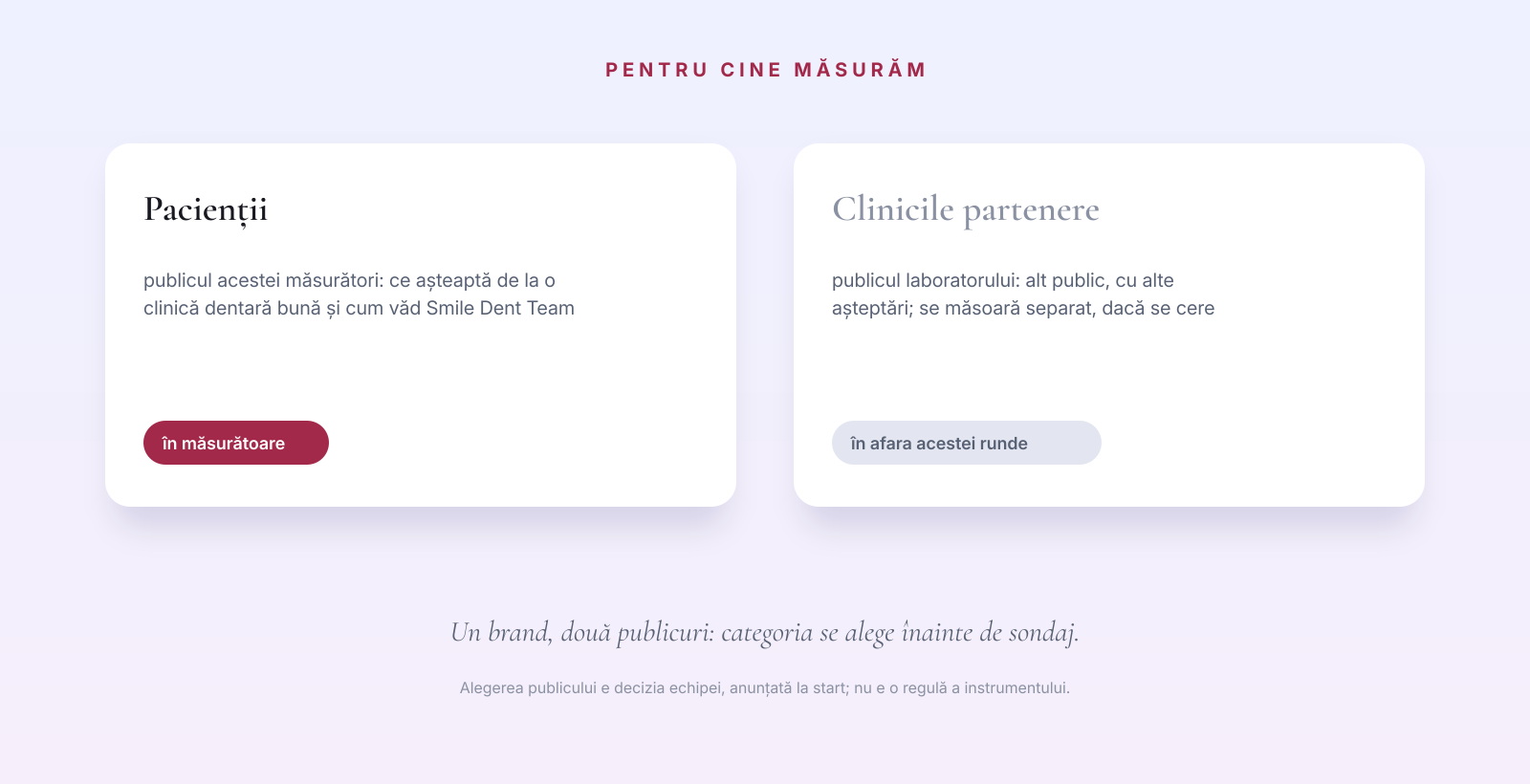
For patients. Smile Dent Team has two publics: the patients of its clinics and, for the laboratory, partner clinics. Their expectations differ: a patient chooses a clinic, a dentist chooses a laboratory. Mix them in one survey and Expects no longer describes any category. The team is now measuring the clinic brand for patients in Chișinău; the laboratory, with its own public, can be measured separately.
06Who does what in the SMK260 team?
The team has roles: a coordinator, two coders and the rest of the team on materials and the survey. The coordinator is the link with Smile Dent Team. The first coder reads all the published materials; the second independently checks part of them, so the result does not depend on a single interpretation. The rest of the team gathers the materials and prepares the survey. The marketing director opens access to the channels, confirms their list and takes part in the session where leadership chooses its primary archetype. The lecturer follows progress and corrects the coding where the two coders disagree.
07What does Smile Dent Team get at the end?
The brand's baseline snapshot: four profiles, six distances and a diagnosis presented by the team to leadership, with recommendations. The company can take over the measured brand in ACM Marketing, use it in its marketing strategy and re-measure a few months later to see whether the changes moved anything. For us, the students, it is a real brand, a method professionals also use and a result that stays with someone, as at Repromed.
08What will the measurement not tell us?
It does not assess the quality of treatments or of the laboratory's work. It only measures whether the image Smile Dent Team has of itself, the one it publishes and the one patients hold describe the same clinic. The company's figures remain the company's; the measurement does not verify them.
How long does a dental clinic brand audit with master's students take?
One semester. The visit opens the project; then come the leadership survey, the coding of published materials and the patient survey, and at the end the team presents the brand's baseline snapshot.
Are patients' medical data used?
No. The survey asks about expectations and about the clinic's image, on the same 12 archetypes; it does not ask for diagnoses, treatments or any other medical data.
Can another dental clinic run the same audit?
Yes, with a student group in ACM Education or directly in ACM Marketing. The conditions are the same: leaders who answer, channels with materials and patients who know the clinic. To see how it works, try the demo.
We left the visit with the idea that the Smile Dent Team brand is not only the work it produces: it is also its processes, its values and the people behind them. Over the coming months we will measure whether the image leadership holds is the image patients see.
About the method. The Archetypal Coherence Matrix (ACM Framework) is a brand audit framework created by Dumitru Talmazan. It measures a brand's coherence on four perspectives (what leadership believes, what the brand publishes, what customers expect from the category and what they see), all on the same 12 archetypes, and calculates six distances between them. The instrument is openly published on Zenodo (DOI 10.5281/zenodo.22926708), and the verification benchmarks were registered on OSF before data collection (DOI 10.17605/OSF.IO/6NDRB). The team's project runs in ACM Education.
Source of figures: Smile Dent Team's presentation piece published by Forbes Moldova on 6 May 2026 (figures stated by the company). Names and photographs of people appear with their consent.