The 8 moments when a brand audit changes a decision
You need a brand audit whenever you are making a brand decision and don’t know where you are starting from. ACM Framework does it at eight moments, across four phases, from the starting audit to periodic measurement.
Dumitru Talmazan
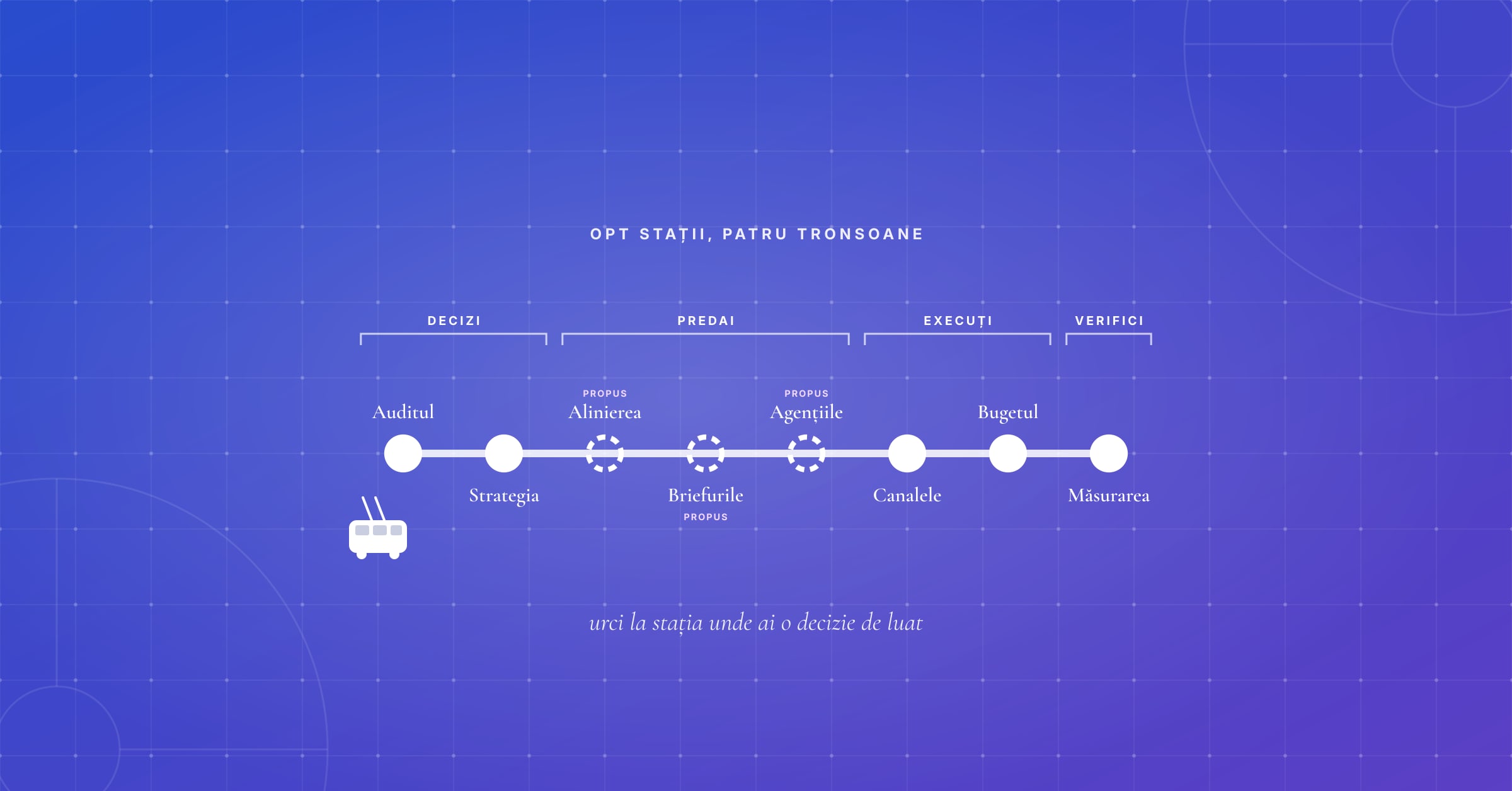
The trolleybus on my route has eight stops to the end of the line. Nobody rides it from the first to the last. Everyone gets on where they have business and gets off where they have business. But everyone travels on the same line, and that makes the journey predictable: you know what comes next and you know where you left off.
A brand audit is usually treated as a one-off trip: a report, a presentation, then the drawer. ACM Marketing is designed as a line. Eight stops in the life of a brand, on four sections, where a decision can be made on data, not on taste.
01When do you need a brand audit?
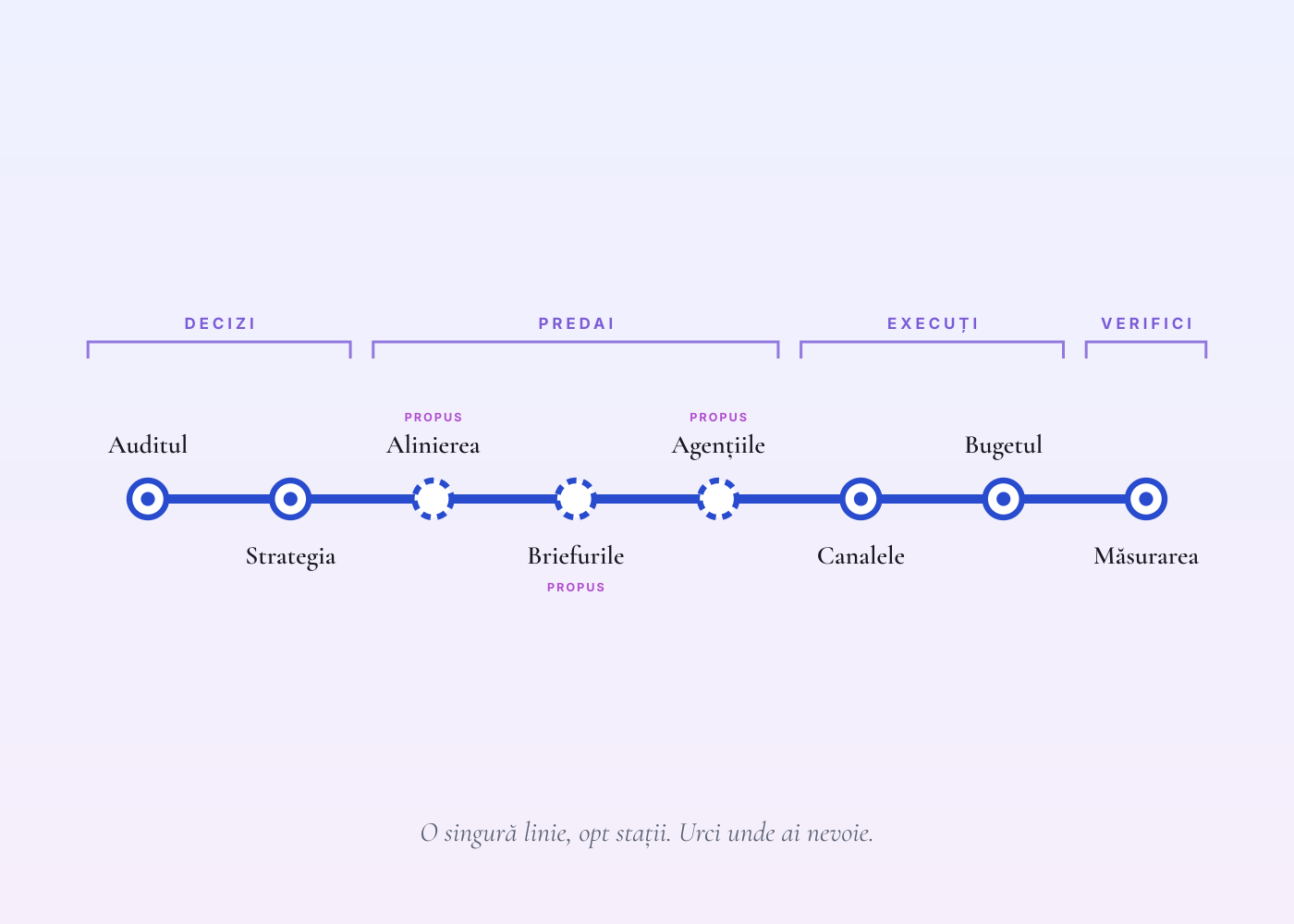
Whenever you are making a brand decision and don’t know where you are starting from: before a strategy, a brief or a budget, and afterwards, to see whether it worked. In the platform there are eight moments like this, laid out across four phases: Decide, Hand over, Execute, Check.
The line has two boarding points. “An existing brand starts here”, says the first stop, the audit. “A new brand starts here”, says the second, the strategy: there is nothing to photograph when you haven’t published anything yet.
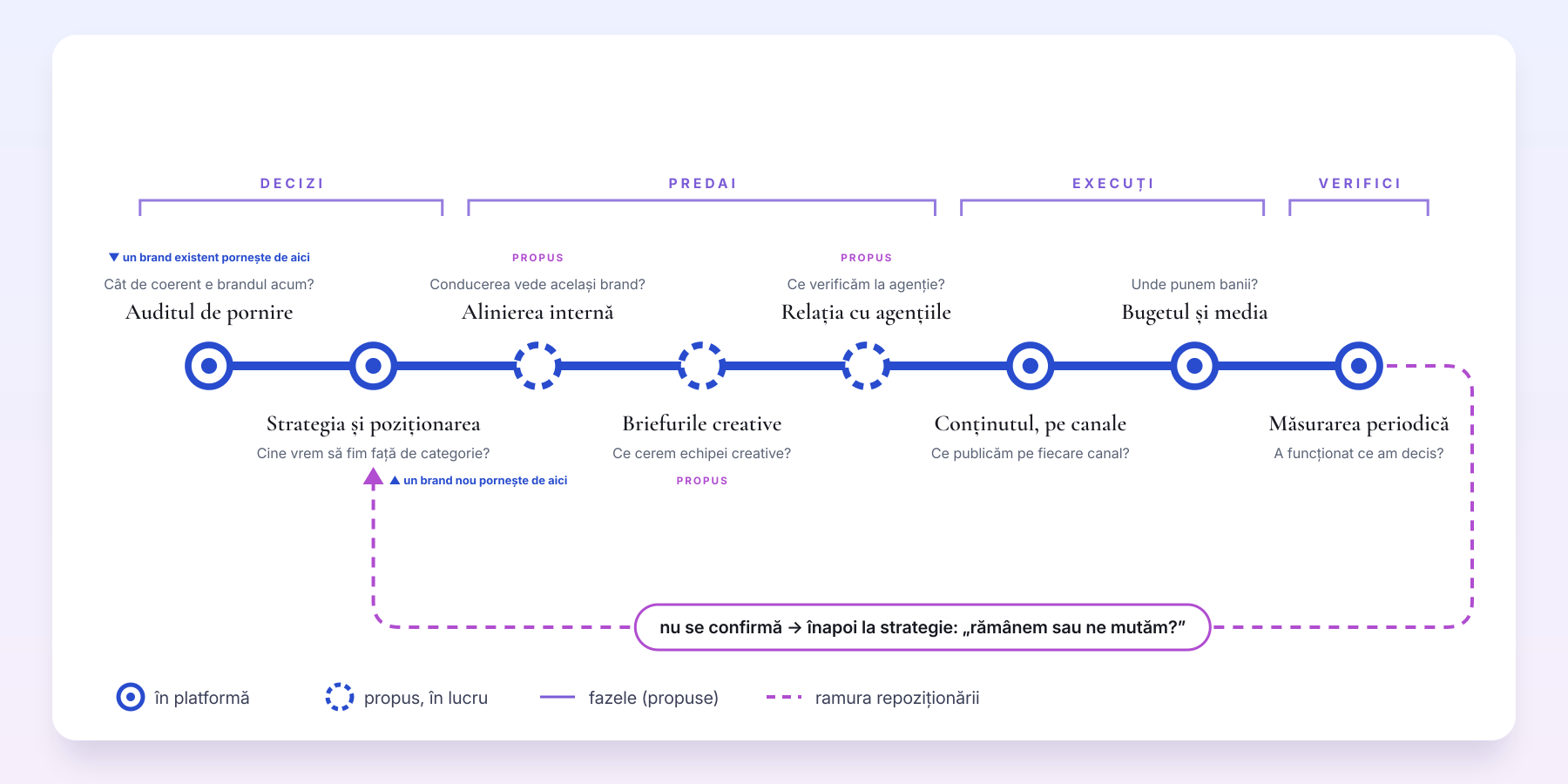
Every stop works the same way: the question of the stage, what the data says, your decision, the steps and the result. The card for each stage in the platform has exactly these five blocks.
02How coherent is the brand right now?
The first stop, the starting audit. It takes in the management survey, the coded materials from the channels and the public survey. The Archetypal Coherence Matrix (ACM Framework) places them on the same 12 archetypes, calculates the six gaps and gives the verdict and the chain: the first link to fix. The platform is clear: “The audit is neither confirmed nor refuted: it is the snapshot that every re-measurement is compared against.”
03Who do we want to be in our category?
The second stop, strategy and positioning, closes the first section, Decide. Management chooses the primary archetype in the calibration meeting, the marketing director decides the position relative to the category, and if the brand already exists, management says clearly: do we stay or do we move? If we move, it is with a target and a deadline, in writing. The re-measurement date is declared before anything starts. ACM Framework does not say which archetype is best: it shows where the brand stands relative to its category, and the choice belongs to management.
04Does management see the same brand?
The second section, Hand over, begins with internal alignment. The marketing director shows management the picture from the market, management fixes the shared profile and what does not change, and new people receive the same profile, not a second-hand version. Internal agreement is measured again, as a number. This stop is proposed and still in progress in the platform.
05What do we ask of the creative team?
Creative briefs. Marketing reads, archetype by archetype, what is missing from the content and what is surplus compared with what management decided, writes a brief per channel starting from the primary archetype and hands it to the team or the agency. The last step belongs to the creative team: the reply back, what they understood from the brief. ACM Framework does not write the briefs and does not judge creativity. A proposed stop, in progress.
06What do we check at the agency?
The relationship with agencies closes the Hand over section. The agency receives the same brief and the same map, its materials are coded by channel, and the measurement from before is compared with the one after the campaign. Management keeps, adjusts or changes the collaboration with the data alongside. If the materials stray from the profile, the platform sends you back to the brief, with the corrections, not to changing the agency at the first sign of trouble. A proposed stop, in progress.
07What do we publish on each channel?
The Execute section starts with content, by channel. Each channel is coded separately, the one that strays the most is found, corrected and coded again. If it has moved closer to the brand’s fingerprint, you do the same with the next one. ACM Framework does not say what performs on a channel; it says whether the brand is the same on that channel.
08Where do we put the money?
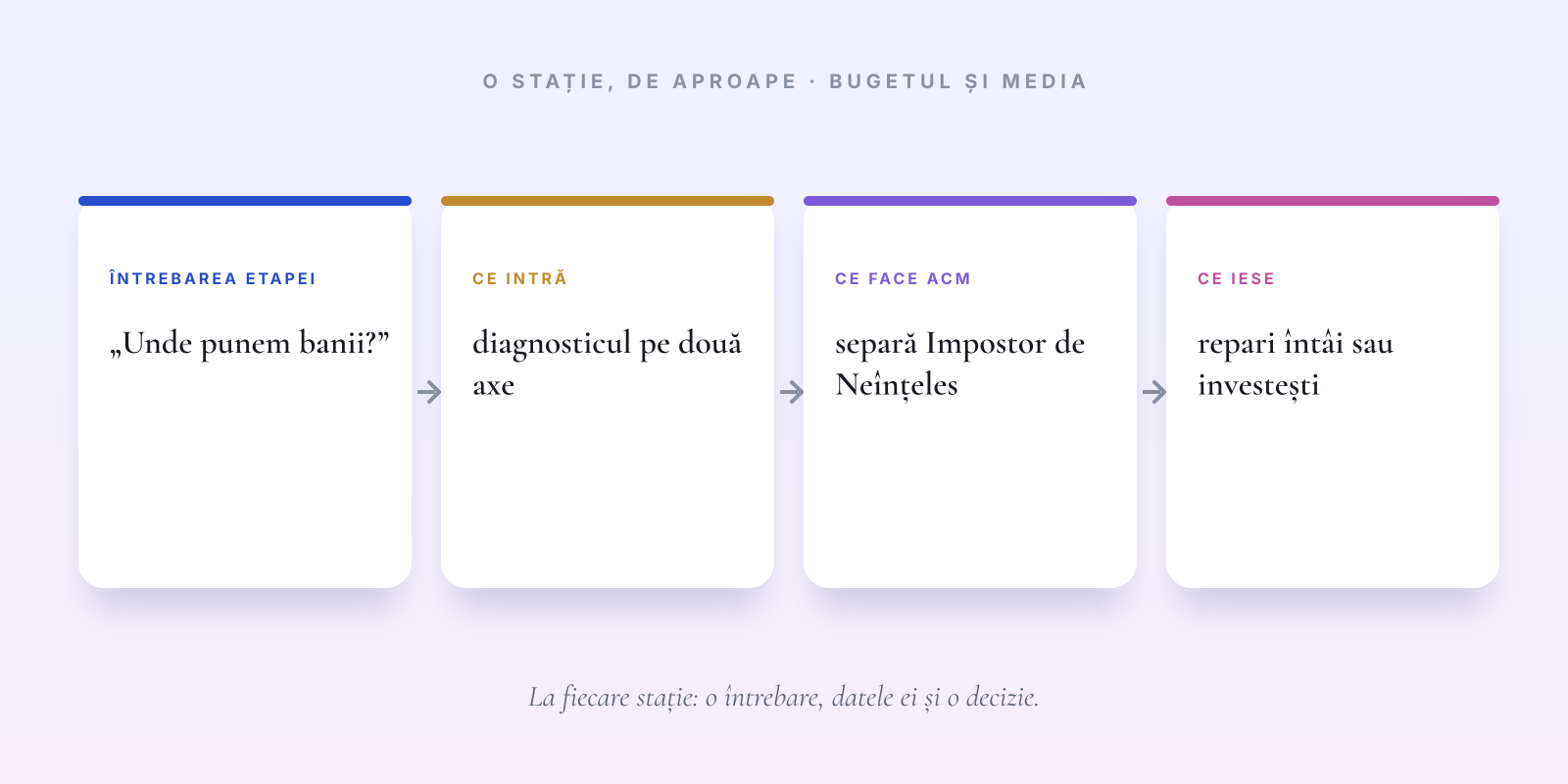
Budget and media. The marketing director first reads the diagnosis: is what the brand does seen? The decision follows from there: do we fix things first, or invest in visibility? Then the amount per channel, moving money towards the channels where the public sees you, and the review date, written down before anything is spent. ACM Framework does not say whether the money came back and does not predict sales: it only says whether what you pay for is seen as the brand you decided on.
09Did what we decided work?
The last stop, periodic measurement, stands alone on the Check section. The next wave is scheduled with the same survey, the brand is re-measured on the same map and compared with the declared target. Three answers come out: confirmed, not confirmed, or cannot say yet. Management decides: keep, adjust or revise the strategy. ACM Framework does not say why a number moved; it says whether it moved and in which direction.
10Where is repositioning on the line?
It is not a stop. It is a branch. Its question, “do we stay or do we move?”, is asked at strategy, with the target and deadline declared in advance. The answer comes at periodic measurement. When the target is not confirmed, the platform says: “Not within target: revise the strategy. The question from Strategy is back: do we stay or do we move?” and takes you back to the second stop. How to measure the move, step by step, is in the article on repositioning in the Marketing series.
You don’t have to go through all eight stops. You get on where you have a decision to make. But without the starting snapshot you have nothing to compare anything that follows against, and without the re-measurement date, declared in advance, you have nothing to check against. For each stop there is an article in the Marketing series that covers it in depth.
On my route, the trolleybus comes every ten minutes. You don’t have to catch the first one. You just need to know which stop you get off at and, if you got it wrong, which one to go back to.
About the example in this article. The trolleybus line is imaginary. The eight stages, the four phases, the two entry points, the questions for each stage and the quoted texts come from the “Along the marketing stages” tab of the “Conclusions and recommendations” screen in the ACM Marketing platform (rules v1.1, 09.10.2026). Internal alignment, creative briefs and the relationship with agencies are marked there as proposed, as are the phases.