What ACM Framework doesn’t claim: the limits of a brand audit
A brand audit can’t tell you how much you will sell and can’t compare different markets. ACM Framework writes its boundaries up front: it doesn’t predict sales, doesn’t compare countries, has provisional thresholds, doesn’t measure employees and gives no index from partial data.
Dumitru Talmazan
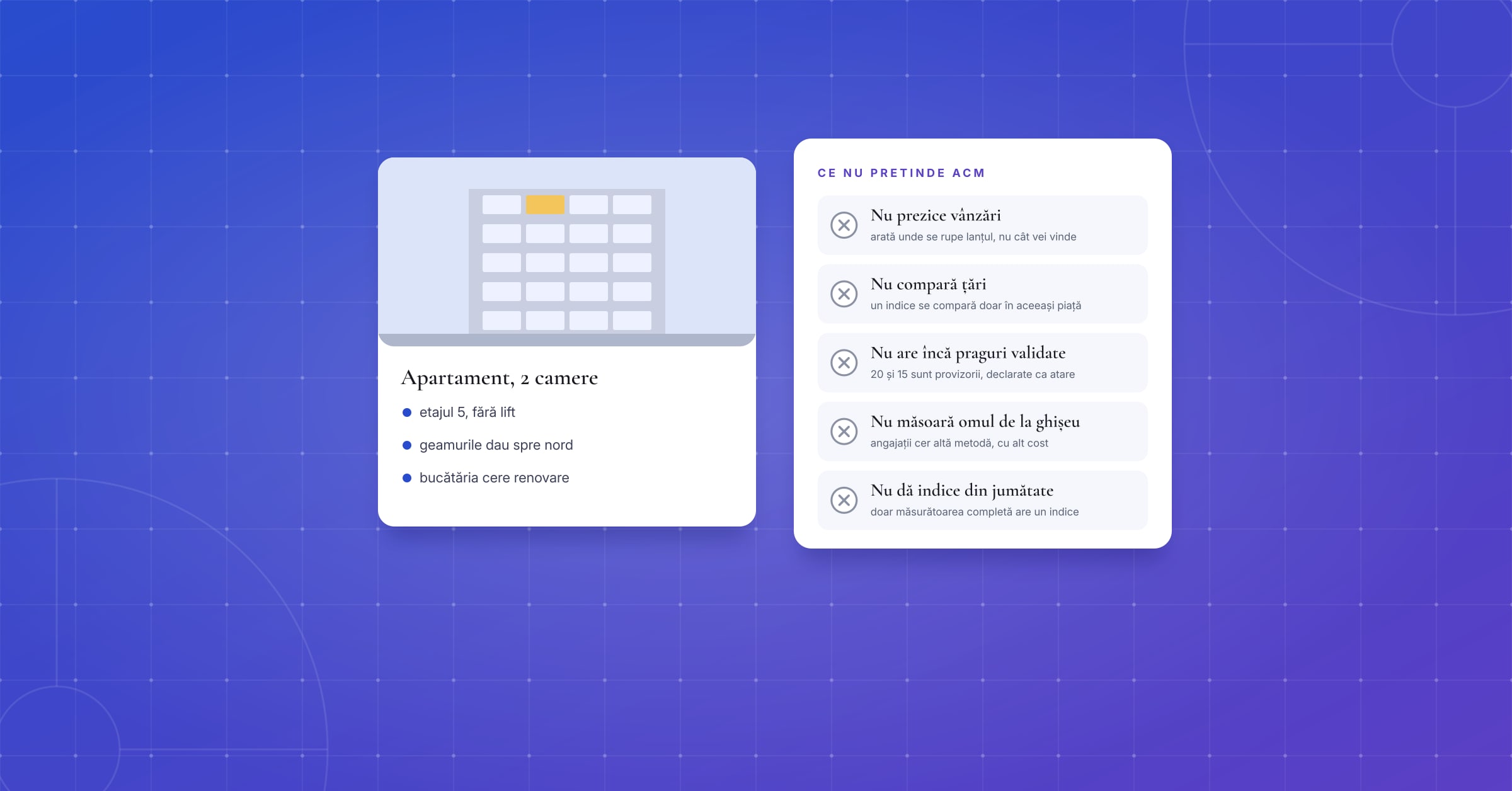
A friend put his flat up for sale with a lovely listing: bright, central, ideal for anyone. In the first month thirty people came. They climbed five floors on foot, looked at the north-facing windows and the old kitchen, and left politely. Nobody bought. One evening the agent rewrote the listing: 5th floor, no lift, north-facing windows, kitchen needs renovating. Five times fewer people rang. Within three weeks the flat was sold to a couple who were looking for exactly that: lots of space, a low price and a kitchen they could do up themselves.
The honest listing hid nothing, and that is exactly why it worked. It is the same with a brand instrument: if you sell it as the answer to everything, everyone comes to the viewing and leaves disappointed. Below is the honest listing for the Archetypal Coherence Matrix (ACM Framework), with what it doesn’t have.
01What can’t a brand audit measure?
It can’t measure how much you will sell, it can’t compare different markets and it can’t give more than the data it has. ACM Framework writes these boundaries up front, in the published instrument, before anyone asks.
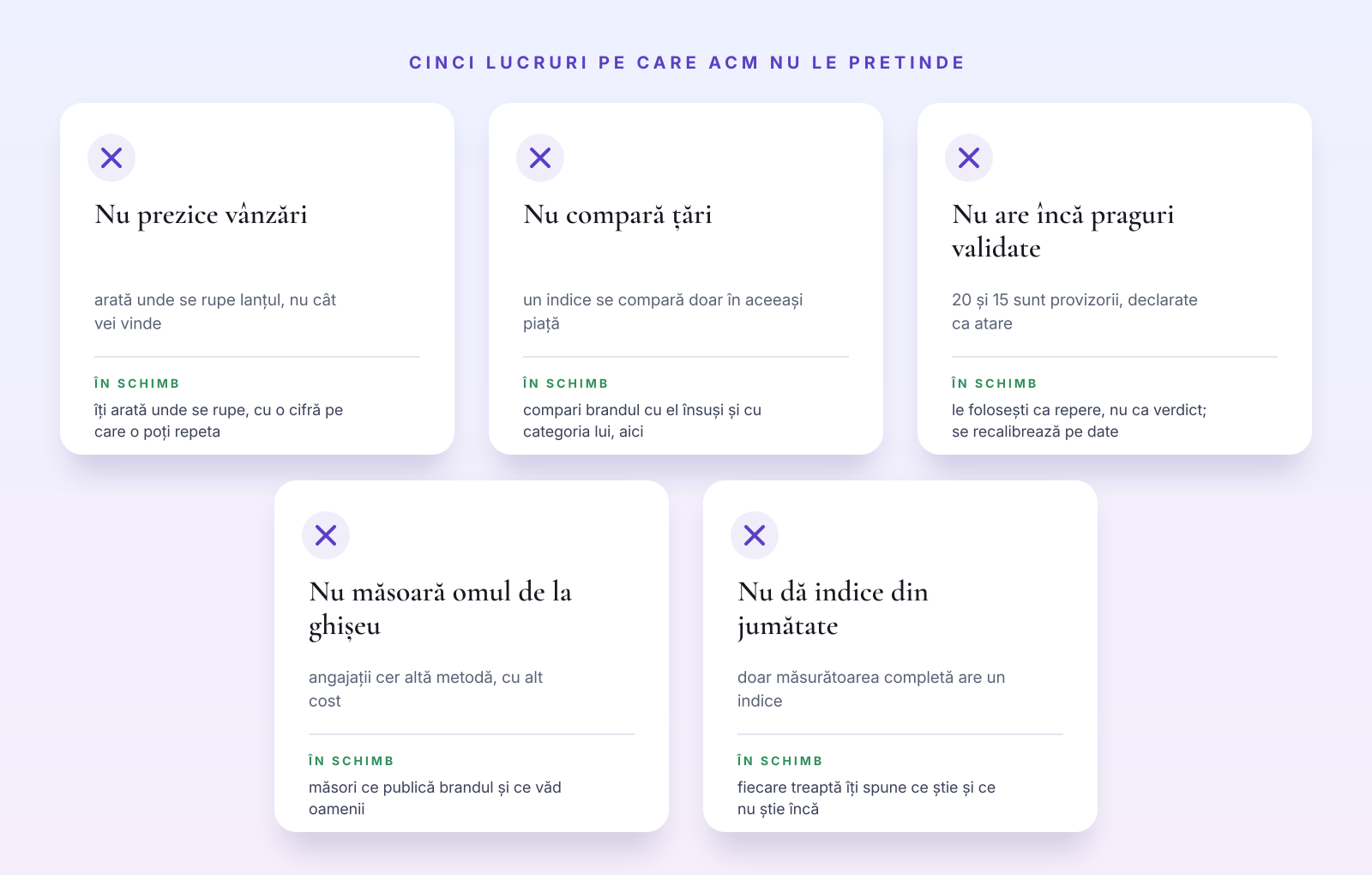
There are five. Below, each comes with the question a client usually asks, and the short answer.
02Does ACM Framework predict sales?
No. ACM Framework shows you where the road from what the brand believes to what the customer sees breaks, not how much you will sell if you fix the break.
The link between coherence and results is a hypothesis being tested now, not a property of the instrument. It may be confirmed, it may not. Until then, ACM Framework is like a correctly drawn floor plan of the flat: it tells you where the walls are, not how quickly it will sell.
03Can I compare my brand with one from another country?
Not with the index. An ACM Framework index can only be compared with another one measured in the same market, in the same language and culture.
Within a study, all four perspectives come from the same place. If an archetype means something slightly different here than in another country, it means the same for all four, and the distances stay correct. Across countries, though, the ruler is graduated differently and the numbers no longer line up. That is also why category norms are local: a norm for banks in another market says nothing about the banks here.
04Why aren’t the thresholds a verdict yet?
Because they are provisional and declared as such. The optimal distance from the category, the tolerance and the weights of the gaps will be estimated from data, after collection.
Until then, you use them as reference points. A gap of 26 is not a sentence; it is a sign that it is worth looking there. When the thresholds are recalibrated, they change in the open, with a date, in a new version of the instrument, not quietly, in a report.
05Does ACM Framework measure the people who talk to customers?
Not yet. The employee at the counter, the shop assistant or the voice on the phone are real touchpoints, but measuring them takes a different method.
To find out what a brand does through its people you need mystery shoppers, call-centre recordings, scripts. It is a good method, but it has a different cost and different rules. ACM Framework measures what the brand publishes and what people see, and it says clearly that the counter stays outside. In the same way, two layers of context, the message and the culture, are for now only named, not measured.
06Do I get an index if I measure only part of it?
No. The index adds up all six gaps, so it appears only with the full measurement, with all four perspectives.
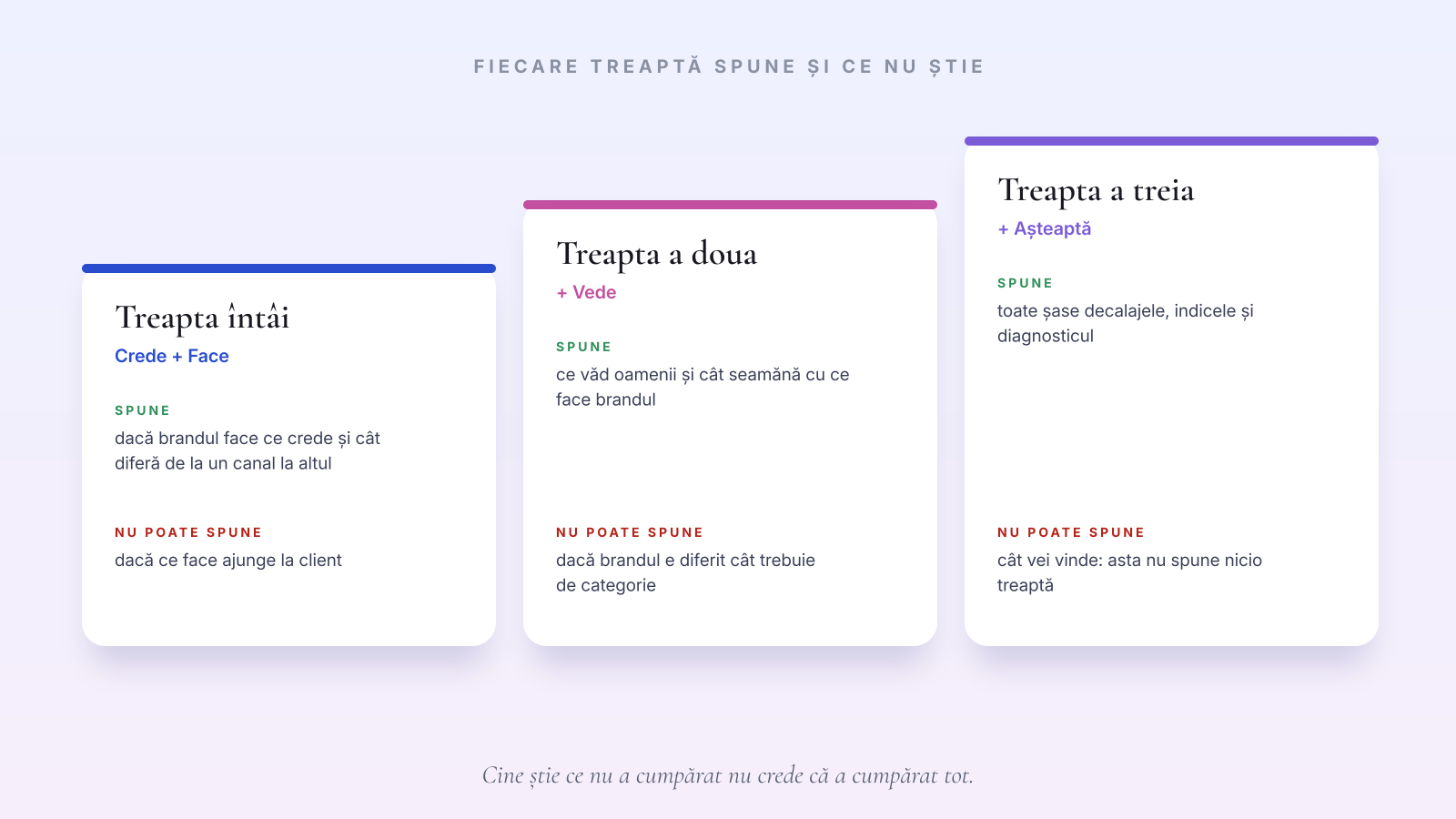
You can start more cheaply, with what management believes and what the brand publishes. You find out whether you do what you say and how much your voice differs from one channel to another. You don’t find out whether it reaches the customer. With a survey you add what people see, but not whether you are as different from the category as you should be. Each tier gives you its own distances, with their names, and writes next to them what it doesn’t know yet. An index calculated from half the data is not an approximation; it is a false number.
07Why does an instrument say what it can’t do?
So that you don’t buy it for something else. A client who doesn’t know what they didn’t buy thinks they bought everything, and when they discover what is missing, they blame the instrument.
With the flat, the honest listing brought fewer people, but the right ones. It is the same with a brand instrument: boundaries written up front keep false expectations away and bring in the people who need exactly what it does.
My friend still keeps the honest listing as a screenshot: 5th floor, no lift, north-facing windows. He says it is the best sales copy he has ever had. When someone pitches you a marketing instrument, ask them for this version: what it doesn’t do. If the answer is “nothing”, you are looking at the bright, central, ideal listing all over again.
About the example in this article. The flat and the listings are imaginary. The boundaries, the measurement tiers and the index rule come from the published ACM Framework instrument.