
Why I published the method before the data
A marketing framework can only be checked if it wrote down its assumptions before the data, with a date, in a public place. ACM Framework published its rules and declared 95 benchmarks before any measurement, so that the predictions can be compared with what comes out.
Dumitru Talmazan
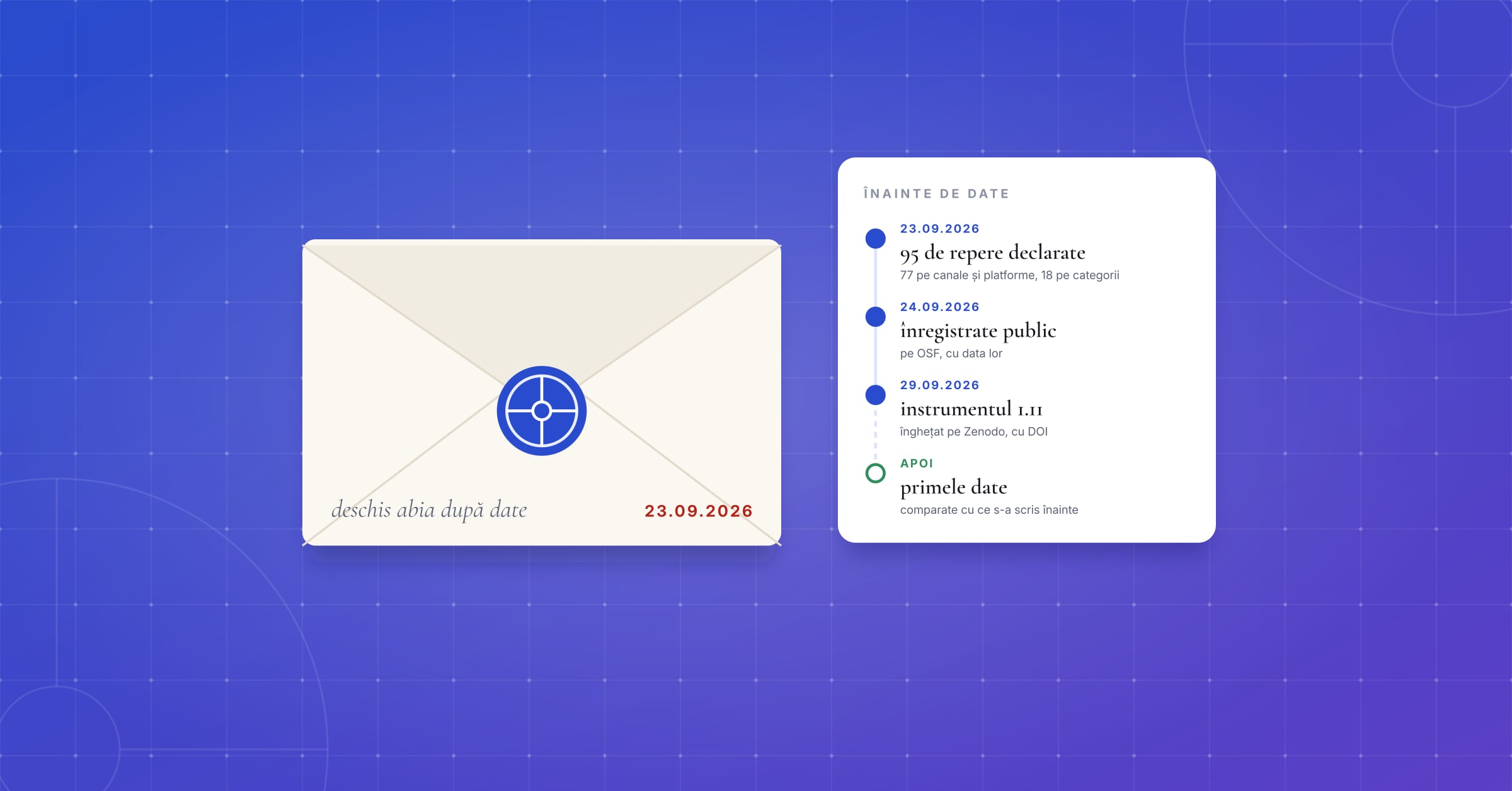
When we left school, our form teacher gave each of us a sheet of paper and an envelope. “Write down what you think you’ll be doing in ten years.” We sealed the envelopes, she signed each one across the flap and put them in a box. At our ten-year reunion, she took them out of her bag. I have never forgotten the laughter that day, nor the silence that came after.
01How do you check that a marketing framework wasn’t made up after the result?
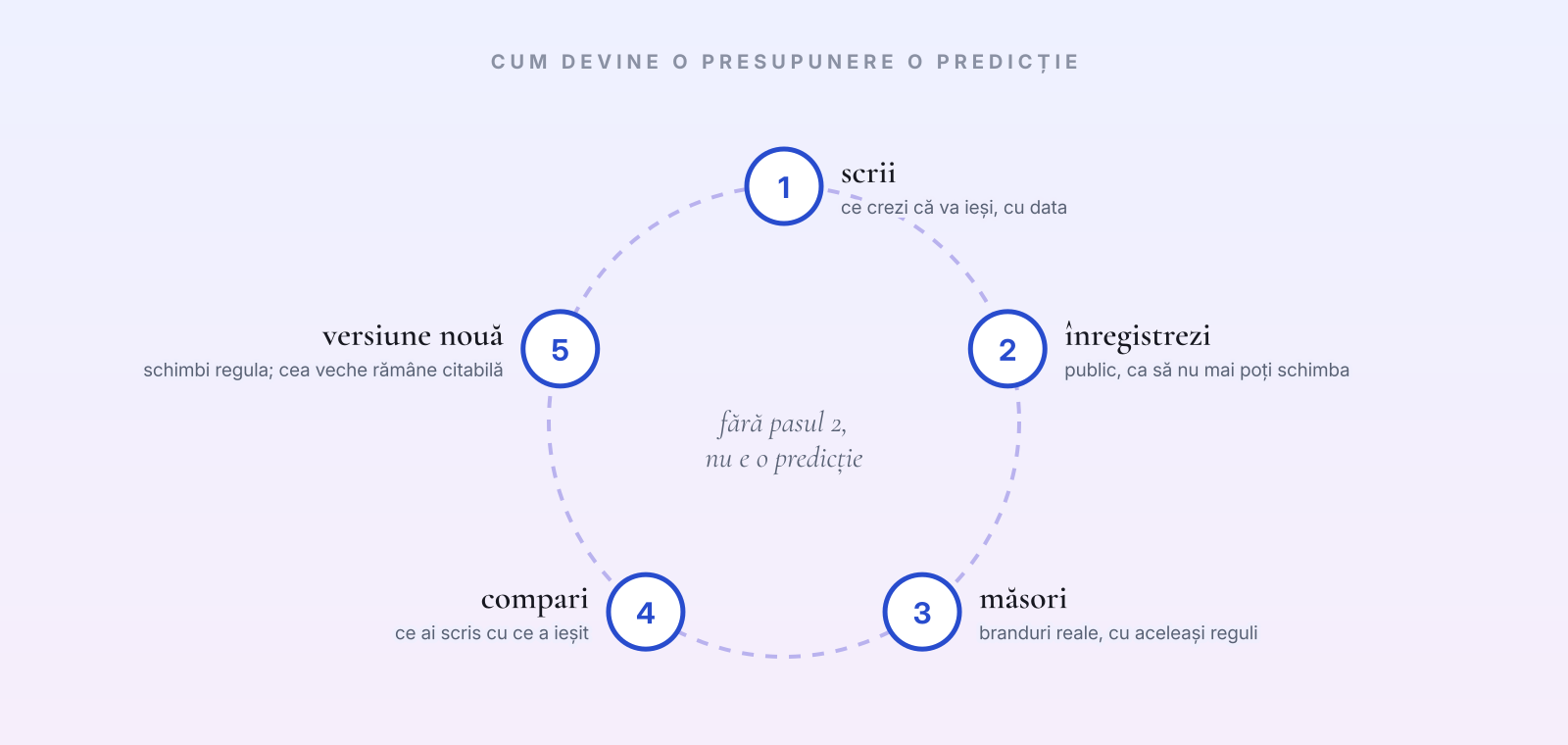
You look at whether it wrote down its assumptions before the data, with a date, in a public place it can no longer change. If it wrote them afterwards, any result will fit.
Most marketing frameworks “always work”. They take the case, explain it, and the explanation seems perfect. It is like the pundit who explains the match after the final whistle: always right, because he has already seen the score.
Our envelopes from school were worth something precisely because nobody could rewrite them any more. The classmate who had written “I’ll be a pilot” and became a teacher could not change his sheet. And the one who had written “I’ll have a bakery” and really did have one, on the corner of the street where we met, had not guessed afterwards. He had guessed beforehand.
„An assumption written before the data and compared with it is a prediction. The same assumption, erased afterwards, is nothing at all.”
02What does it mean that the method is openly published?
It means that all the rules of the Archetypal Coherence Matrix (ACM Framework), from the statements to the thresholds, weights and formulas, are published in a public place, with a permanent identifier. Each version is frozen and stays there, even after the next one appears.
The platform itself reads the rules from the published specification, just like anyone else. It has no secret, better version for clients. If a rule is not in the document, the platform does not use it.
What you gain is simple: you can read the rules before you trust a result. You don’t have to take our word for it.
The method is published on Zenodo: https://doi.org/10.5281/zenodo.22926708
03What are dated benchmarks?
They are the archetypes we expect to see on each channel and in each category, written down before any measurement exists. On 23 September 2026, 95 were declared: 77 for channels and platforms, 18 for industry categories.
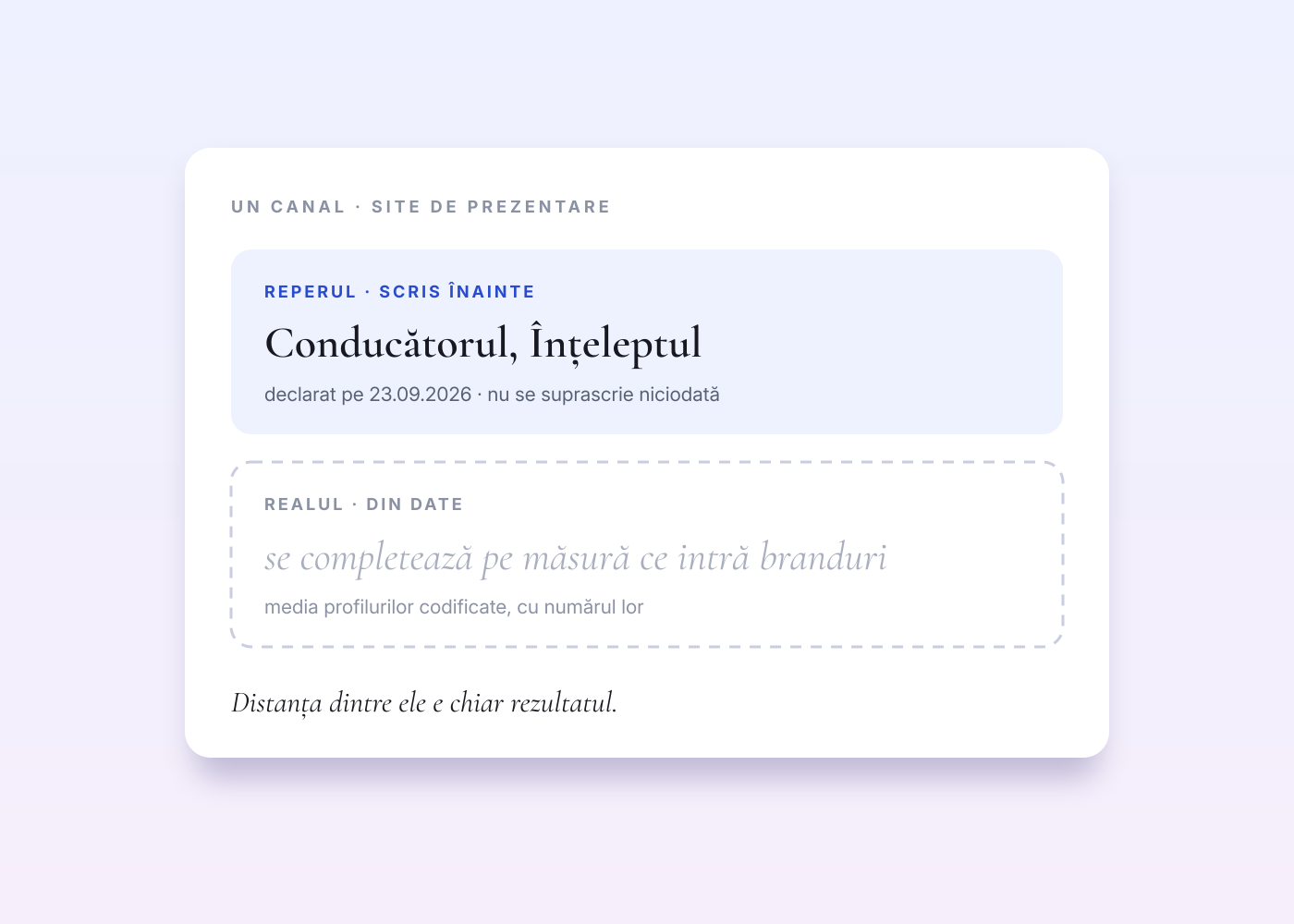
For a company website, for example, the benchmark is Ruler and Sage. For an online shop, Everyman and Innocent. Each benchmark has its date, and the next day, on 24 September, all of them were publicly registered, where they can no longer be edited.
Of the 205 industries in the taxonomy, 33 received a benchmark of their own, because they depart from their category. A digital marketing agency, for example, sells results through ideas, so it sits closer to the Magician than the rest of its category.
04What happens when the data contradict a benchmark?
The benchmark stays exactly as it was written. Next to it appears the actual value, the average of the profiles actually coded, and the distance between the two becomes a result in its own right.
A confirmed benchmark is nice. A refuted one is more useful, because it shows exactly where we were wrong about a context. The figure that matters in the end is simple: how many benchmarks were confirmed. Almost nobody in the field can report it, because almost nobody wrote down their assumptions beforehand.
At the ten-year reunion, the longest conversations were not about the envelopes that had come true. They were about the ones that hadn’t, and about what had taken us somewhere else.
05Why does this matter for a brand, not just for researchers?
Because when ACM Framework tells you that one of your channels departs from what is usually done there, that benchmark was written before your brand existed on the platform. It was not adjusted to tell you what you want to hear.
There is another, less visible gain. When you have both what the brands in a category actually do and what clients want from it, the distance between the two shows an empty space: a character people would welcome and that nobody occupies yet.
06How certain are today’s rules?
All 38 rules of the instrument are on the first rung today, “declared”. They were written before any test and can be used, but they are the author’s claim, not yet a confirmed fact.
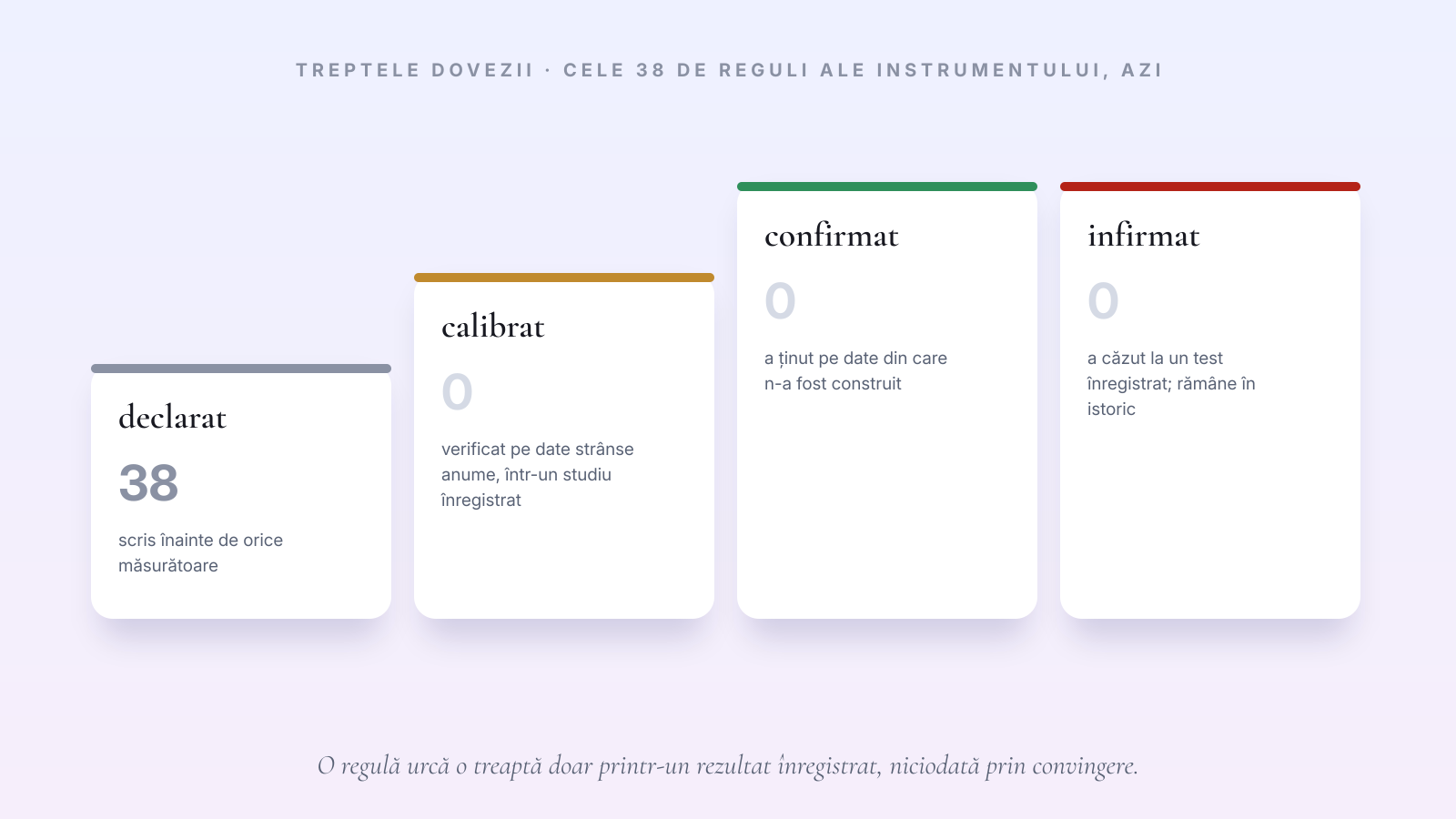
A rule moves up to “calibrated” when it is checked against data collected specifically for it. It becomes “confirmed” only if it holds on data it was not built from. If it fails a test, it becomes “refuted”, stays in the record with the test that refuted it, and the next version changes it. No rule moves up through persuasion.
07What changes from one version to the next?
Only what has been changed for a reason, with a note of exactly what. Each new version of the instrument is frozen with its own identifier, and the old one remains citable, so that anyone can reproduce a result with the rules in force on that date.
That way someone, five years from now, can open today’s envelope and see exactly what we believed then.
Our envelopes sat in a box for ten years, signed across the flap. Nobody could rewrite them after finding out how things had turned out. That is what is worth asking of any framework that explains every brand perfectly: where are its envelopes? What did it write beforehand, with what date, and where can it be read? Without them, all that is left is post-match commentary.
About the example in this article. The class, the envelopes and the ten-year reunion are imaginary. The number of benchmarks, the dates of declaration and registration, the rungs of evidence and the rule that forbids overwriting benchmarks come from the published ACM Framework instrument.