From RIFC to ACM Framework: message clarity, brand coherence
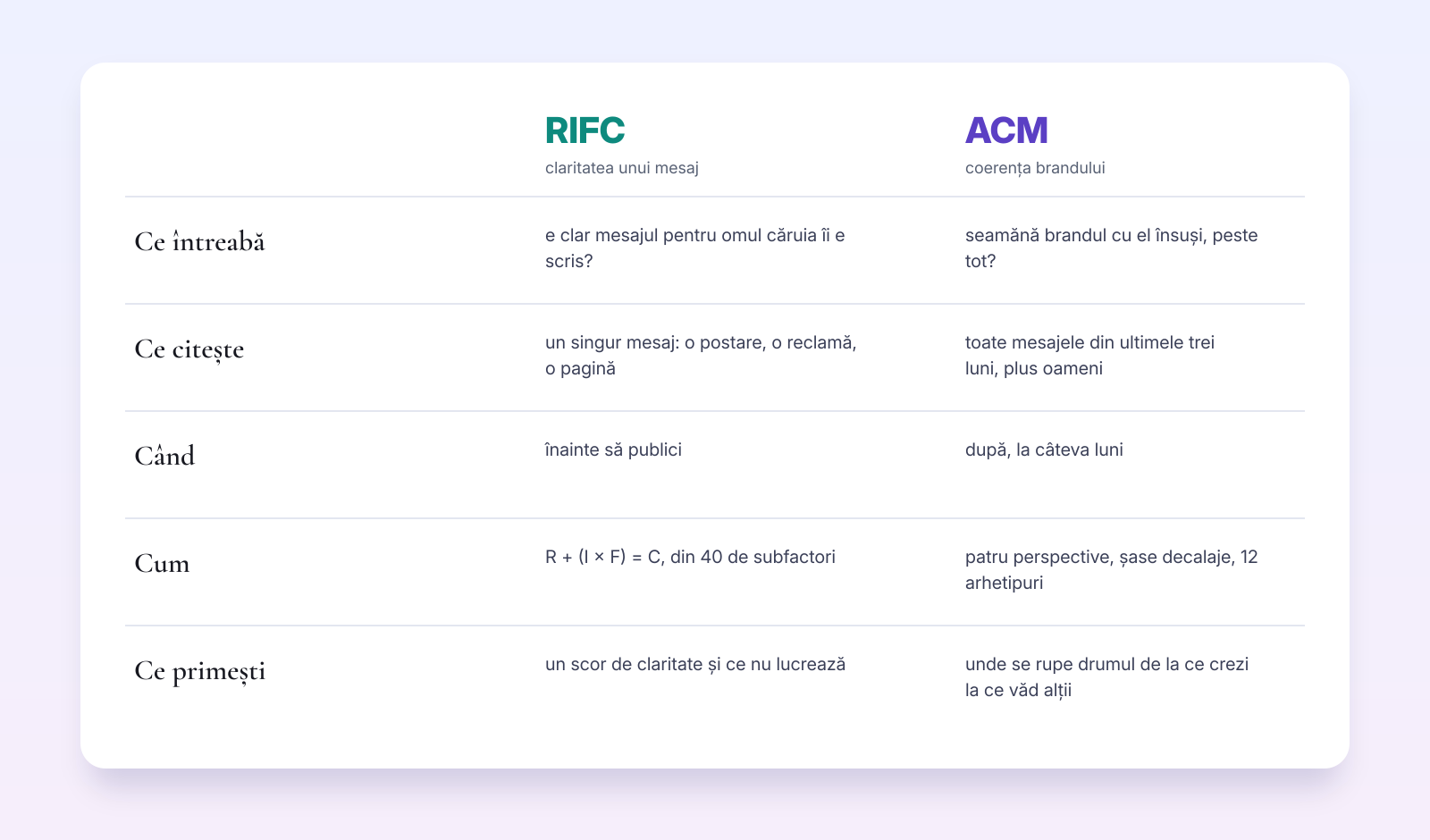
RIFC checks whether a message is clear to the person it was written for, before you publish it. ACM Framework checks whether the brand resembles itself across all channels, over time.
Dumitru Talmazan
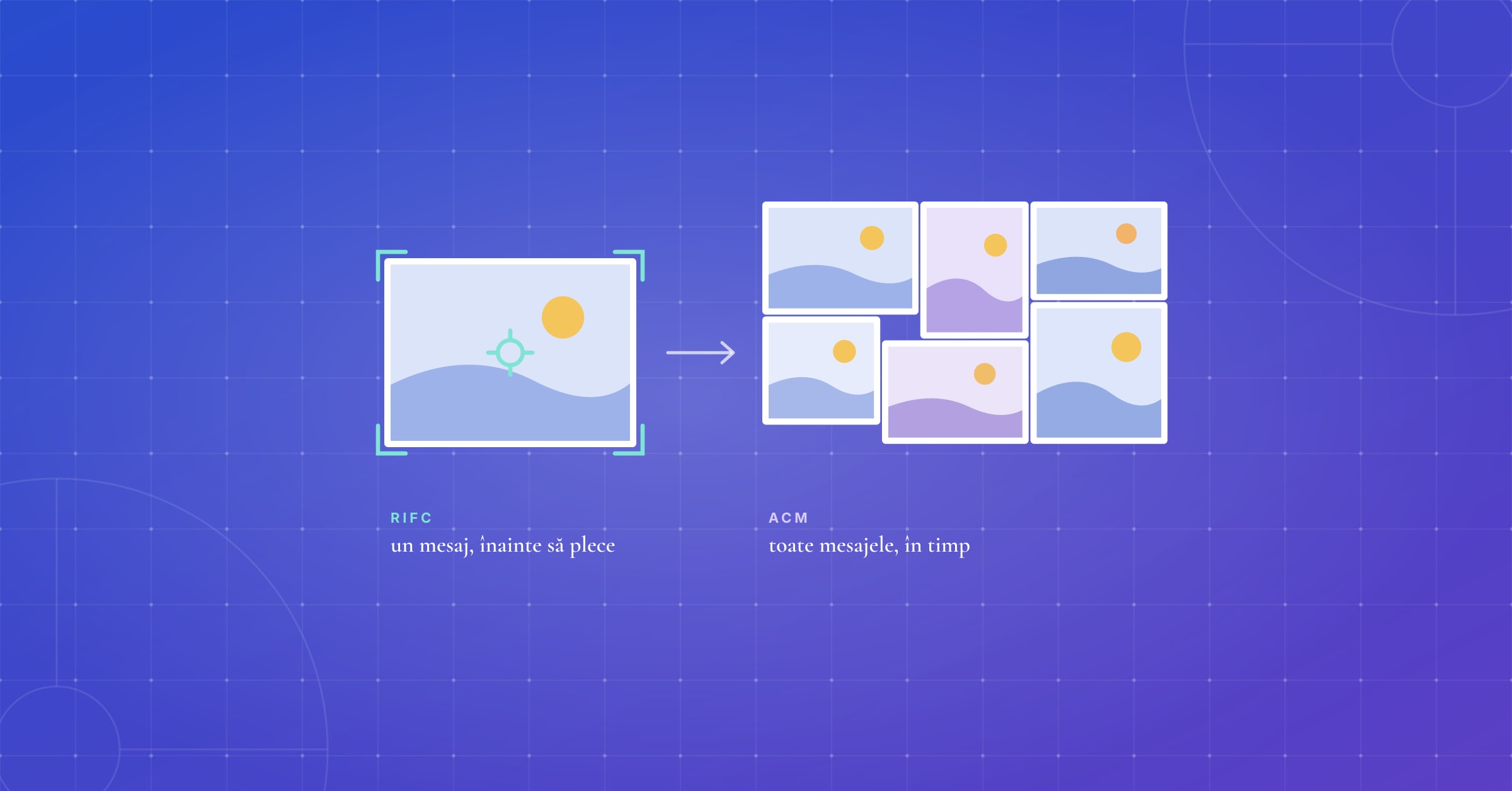
A photographer I know was preparing her first exhibition. She had four hundred shots and a wall for forty. On the first evening she sat with a loupe over every photograph: is it sharp, does it show what it should, does the eye know where to look? On the second evening she laid the forty out on the floor, side by side, and saw something else. Each one was good. Together they looked as if three different people had taken them.
The loupe and the floor are two different checks. The first looks at a single frame. The second looks at the whole wall. Between RIFC and the Archetypal Coherence Matrix (ACM Framework), two instruments by the same author, the difference is exactly this.
01What is the difference between RIFC and ACM Framework?
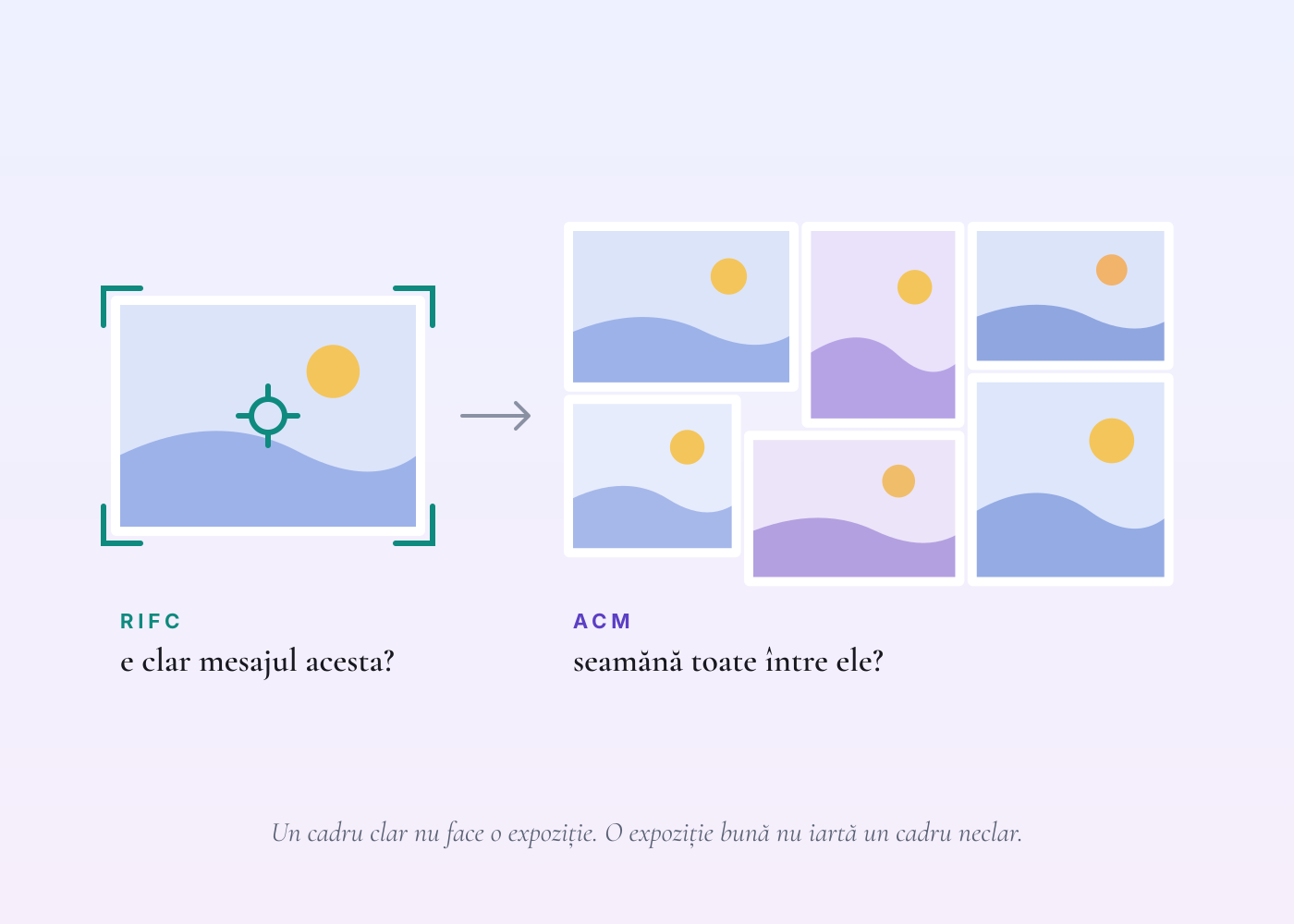
RIFC checks whether a message is clear to the person it was written for, before you publish it. ACM Framework checks whether the brand resembles itself everywhere: in what it believes, what it does, what the customer expects and what the customer sees.
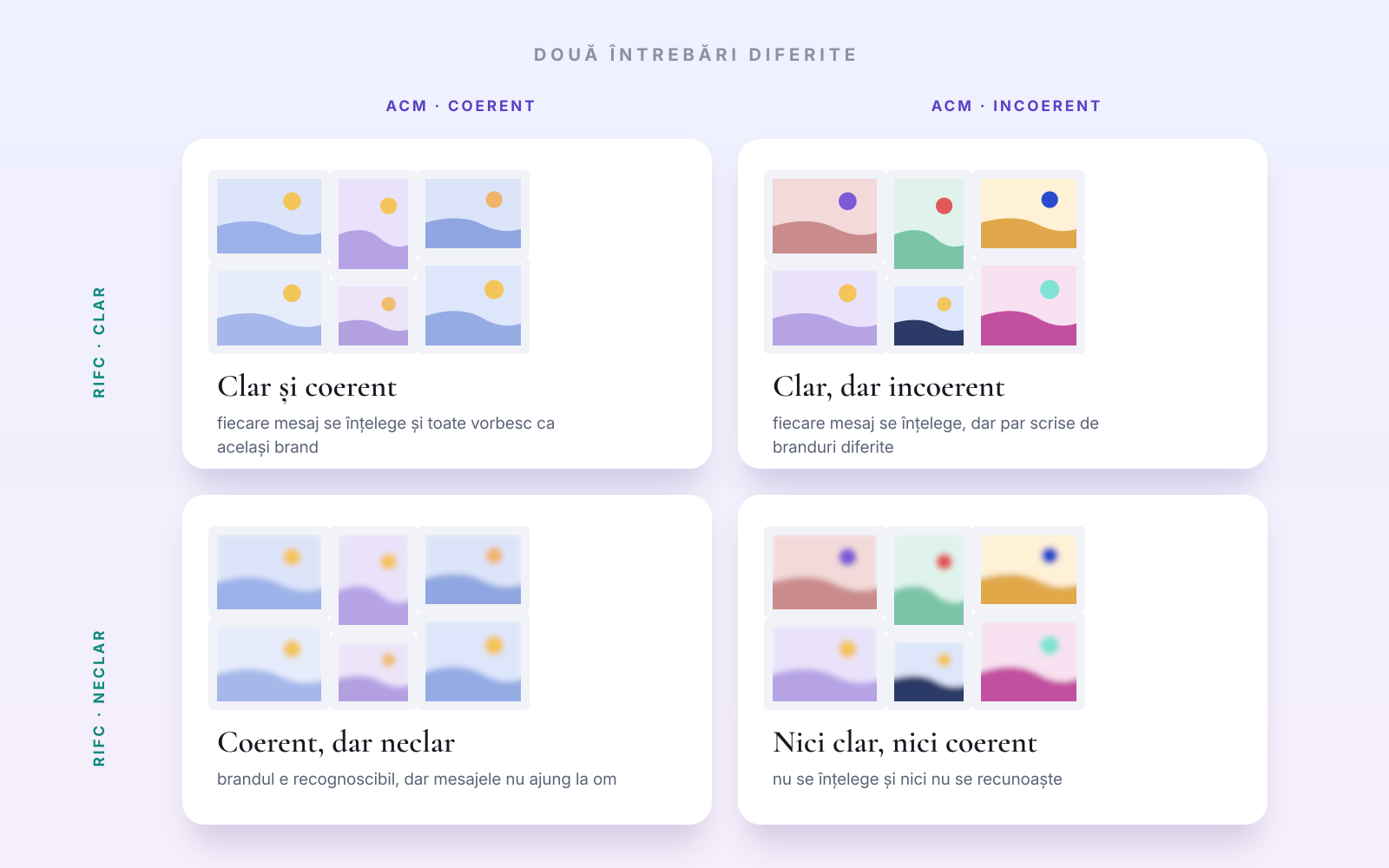
One is the loupe, the other is the view from two steps back from the wall. They don’t replace each other. A brand can have every message clear and still look like three brands. And it can be perfectly recognisable, with messages nobody understands.
02What does RIFC check?
RIFC reads a single message, a post, an ad or a page, and gives it a clarity score. The formula is R + (I × F) = C: relevance, interest and form together produce clarity.
Relevance asks whether the message is for the right person. Interest asks whether it has something to say, what it offers and why it would matter. Form is the way it looks and sounds: design, format, tone. They are multiplied because a beautiful form with nothing to say is still noise. Underneath it all are 40 sub-factors. If relevance is very low, the message is flagged however good it looks: a superb photograph of another event has no place on the wall.
03What does ACM Framework check?
ACM Framework doesn’t read one message, but all of a brand’s messages from the last few months, on every channel, and sets them beside what management believes, what customers expect from the category and what they see.
The result is not a score per message, but the distances between these four images of the brand, on the same map of 12 archetypes. It tells you where the road breaks: between what you believe and what you do, between what you do and what is seen, between what the category promises and what the person gets.
04When do you use RIFC, and when ACM Framework?
RIFC before you publish, ACM Framework once you have published enough for a path to show. The first is a check beforehand, the second is a look back, every few months.
If you have a campaign ready to launch and want to know whether the message reaches people, you need the loupe. If you have had accounts on five channels for a year and feel the brand no longer sounds like itself, you need the wall. The photographer didn’t choose between them. She did the first every evening and the second once, before the opening.
05Can they be used together?
Yes, and they complement each other. RIFC keeps each message clear; ACM Framework shows whether the clear messages tell the same story together.
The natural order is a cycle. You check messages with RIFC as you publish them. Every few months, ACM Framework shows you what brand they have built together and where a channel has drifted. What you learn there goes into the next messages, which go under the loupe again.
06What do the two instruments have in common?
Both are openly published, with their rules and formulas in plain view, and what they test was registered before the data. Both also state what they don’t do.
RIFC has its instrument on Zenodo and its validation protocol pre-registered on OSF since February 2026. ACM Framework has its instrument on Zenodo and its benchmarks registered on OSF since September 2026. Neither promises sales: RIFC doesn’t predict how a campaign will deliver, ACM Framework doesn’t predict how much you will sell. Both show you what isn’t working, so you know where to look.
07Why two instruments and not one?
Because they answer questions that are asked at different moments and about different things. A single instrument that did both would do each part badly.
The loupe doesn’t show you the wall, and from two steps back you can’t see whether a frame is blurred. Kept separate, each can test its own rules, with its own data, and own up to its limits by itself.
At the opening, nobody praised any one photograph. People said the exhibition looked like the work of a single person. That took the loupe for forty evenings and the floor just once.
About the example in this article. The photographer and the exhibition are imaginary. The RIFC formula and its description come from the published RIFC instrument; the perspectives and gaps, from the published ACM Framework instrument.