
Who is USM? Group SMK260 measures the university’s brand
Yes, ACM Framework fits a university brand: it has people who lead it, channels it publishes on and a public that chooses it. Group SMK260 is measuring the USM brand, starting with the Faculty of Economic Sciences.
Grupa SMK260, Universitatea de Stat din Moldova
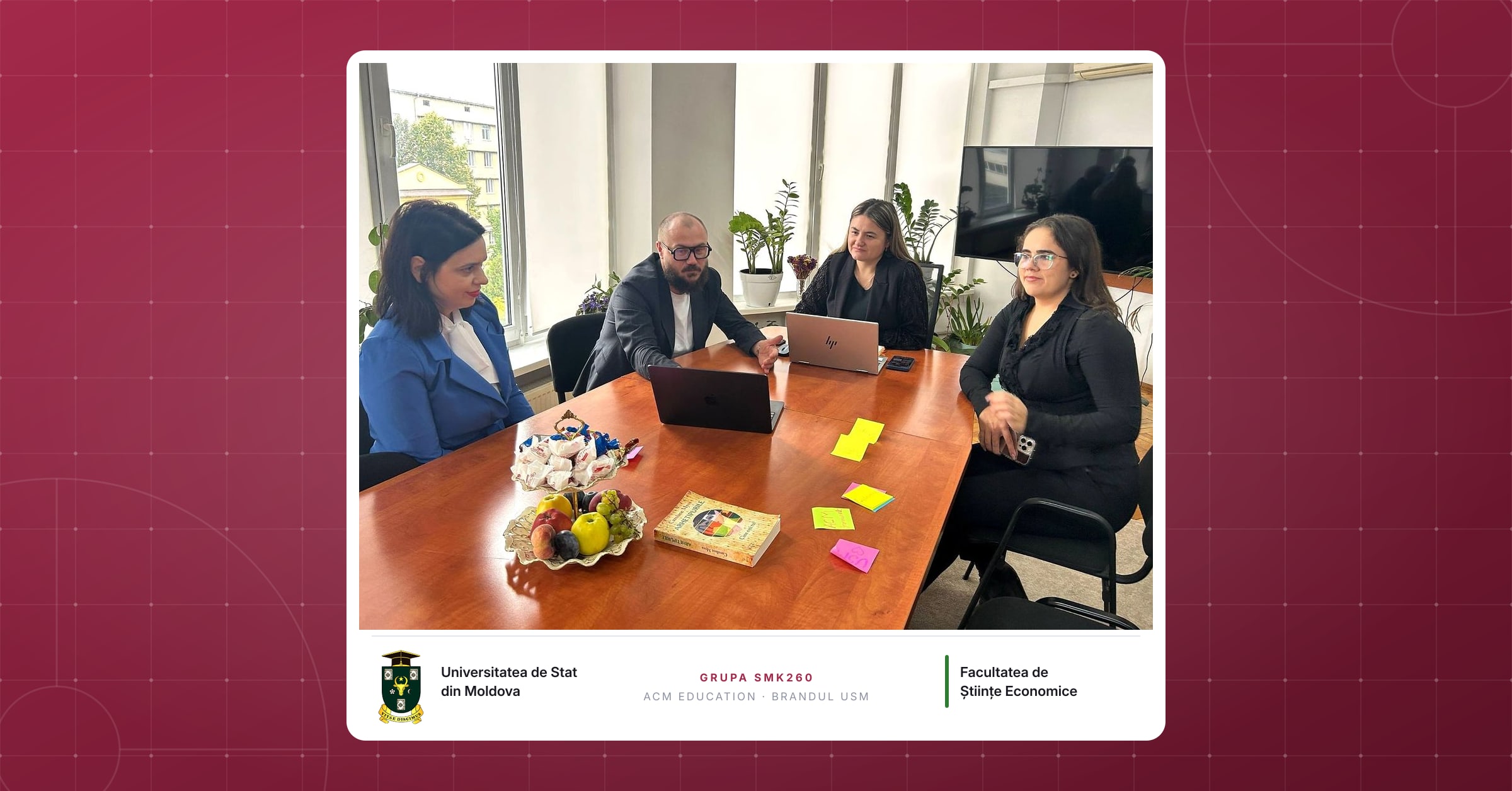
Yes, the Archetypal Coherence Matrix (ACM Framework) fits a university brand: a university has people who lead it, channels it publishes on and a public that chooses it over others, and the method puts these images on the same map. Group SMK260 is now applying it to its own university, Moldova State University (USM), starting with the Faculty of Economic Sciences.
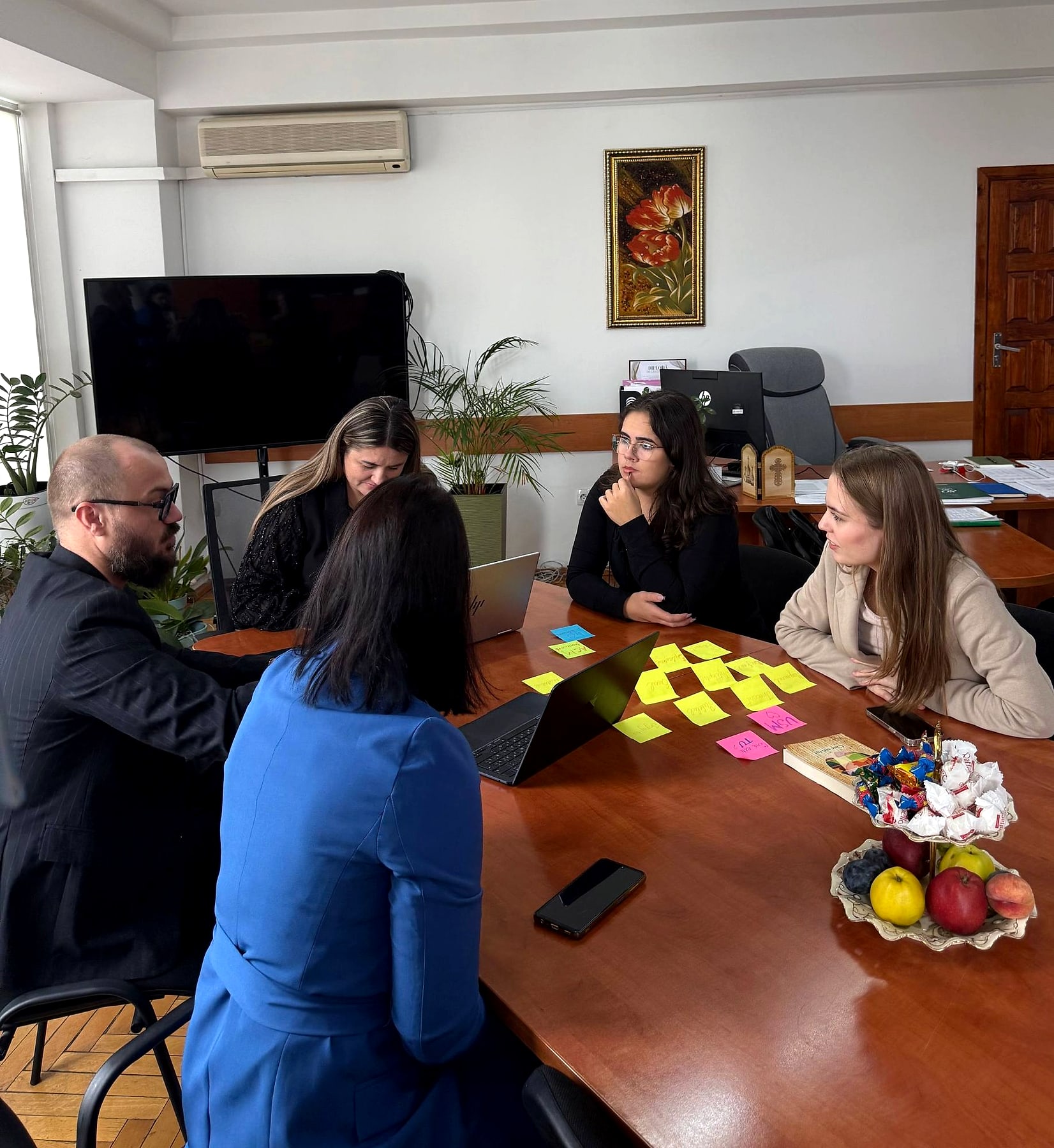
On the table in the dean’s office lay yellow sticky notes with the archetypes’ names and a pink one that read only “Who are YOU?”. The question is for USM. But it is asked by people who know it from the inside: master’s students who study here and lecturers who teach here. That is why, in this project more than anywhere, it matters who answers what, so that the group does not measure its own opinion.
01Is ACM Framework suitable for a university's brand?
Yes, under the same conditions as any brand: people who lead it and can answer the leadership survey, materials published on channels, a category the public understands and enough people who know the brand. A university has all of them: the rector's office and the deans, the website and social media, the category “university” that applicants and parents compare, and the students and graduates who know it.
What is special about a university is that it has several publics at once: the school leaver, the parent who pays, the employer who hires the graduates. The method does not blend them into one score. Each answers the same 12 statements, and the differences between them become distances you can read, as in the article on the four perspectives.
02What do USM's figures say about the university?
That it is the oldest and largest university in the country. According to USM's activity report for the 2023–2024 academic year, the university was founded on 1 October 1946 as the first higher education institution with university status in the Republic of Moldova; it has about 11,742 students across three cycles, in 14 faculties, and more than 150,000 graduates. The same report dates the Faculty of Economics to 1953. The figures say what the university does. They do not say how it is seen by those who choose it, or choose somewhere else.
03What did we agree at the Faculty of Economic Sciences?
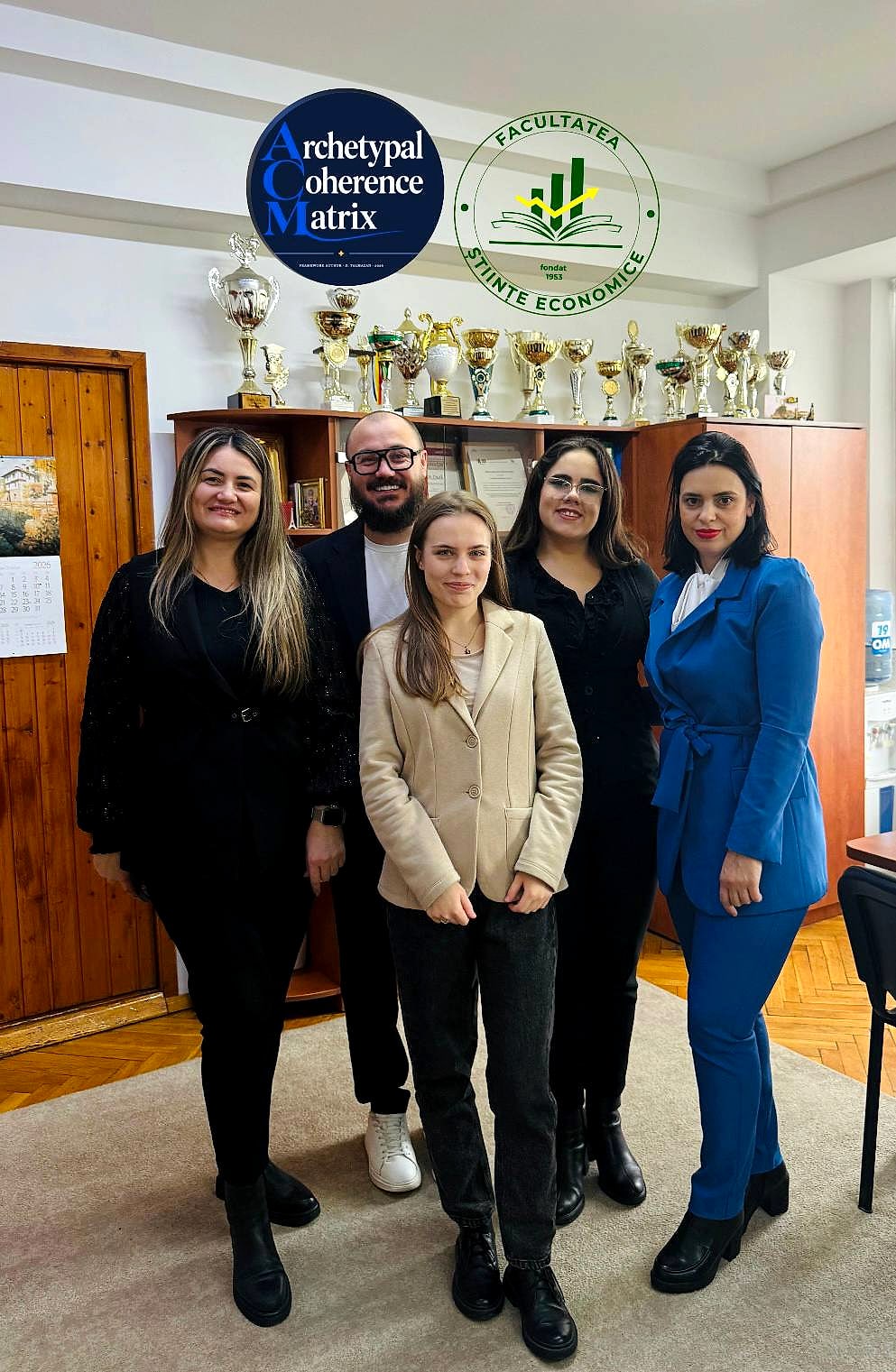
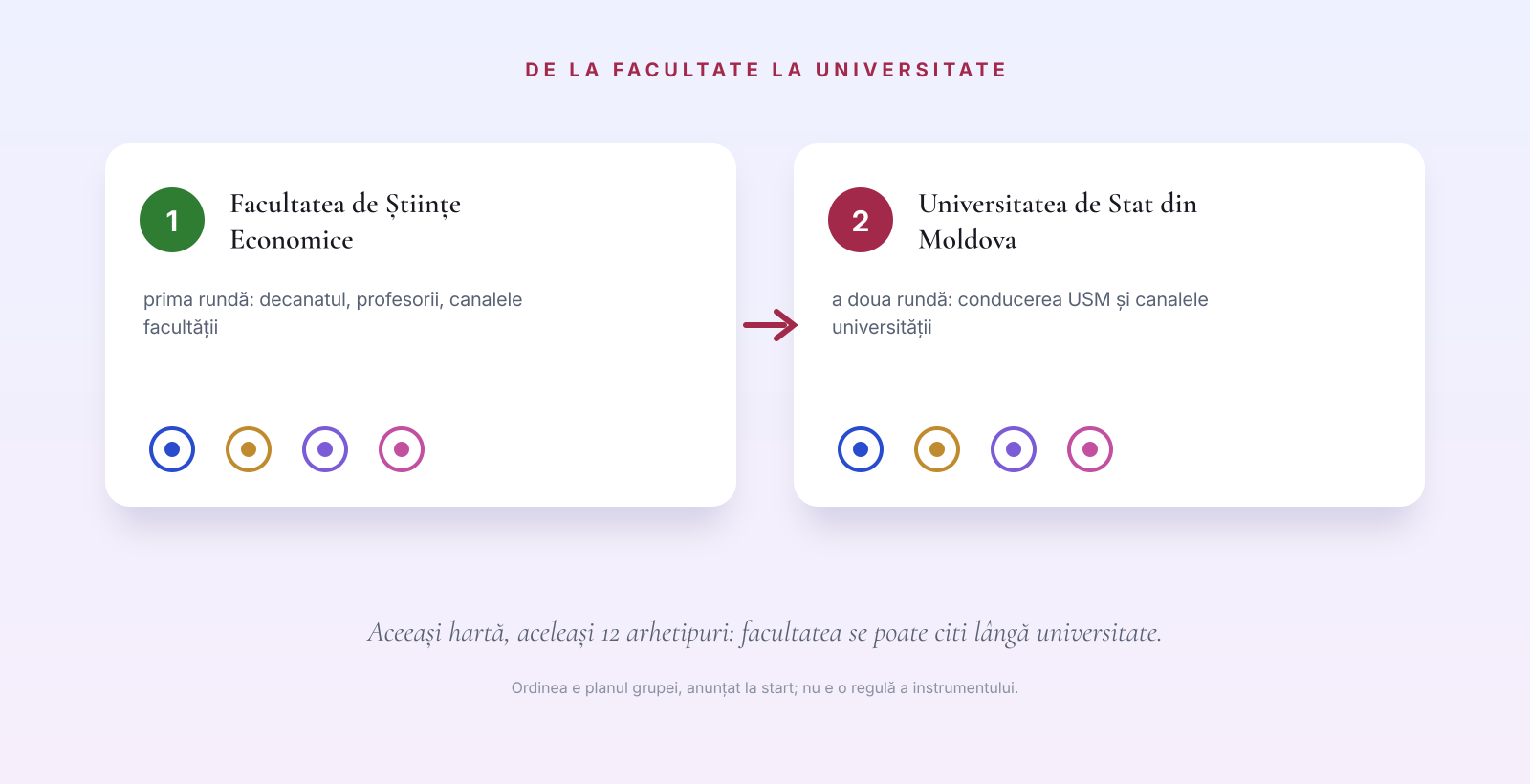
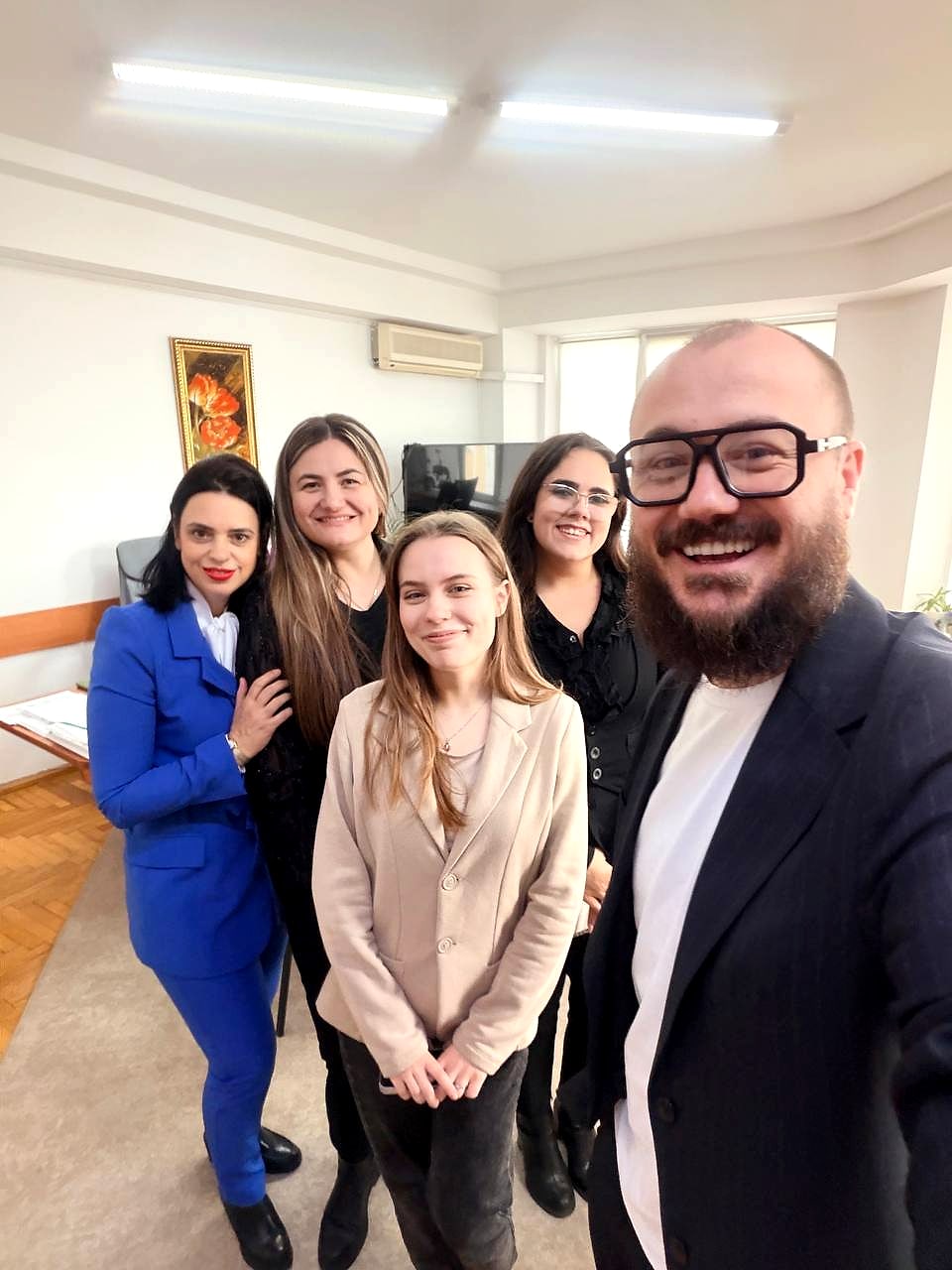
Ms Adriana Buzdugan, PhD, Associate Professor, Dean of the Faculty of Economic Sciences, welcomed the group and expressed her openness to collaboration. The order announced at the start: the discussions and analyses begin at faculty level, then the dialogue and the conclusions extend to the whole USM community. This article brings no conclusion yet: the measurement is only beginning.
04What will we measure at USM?
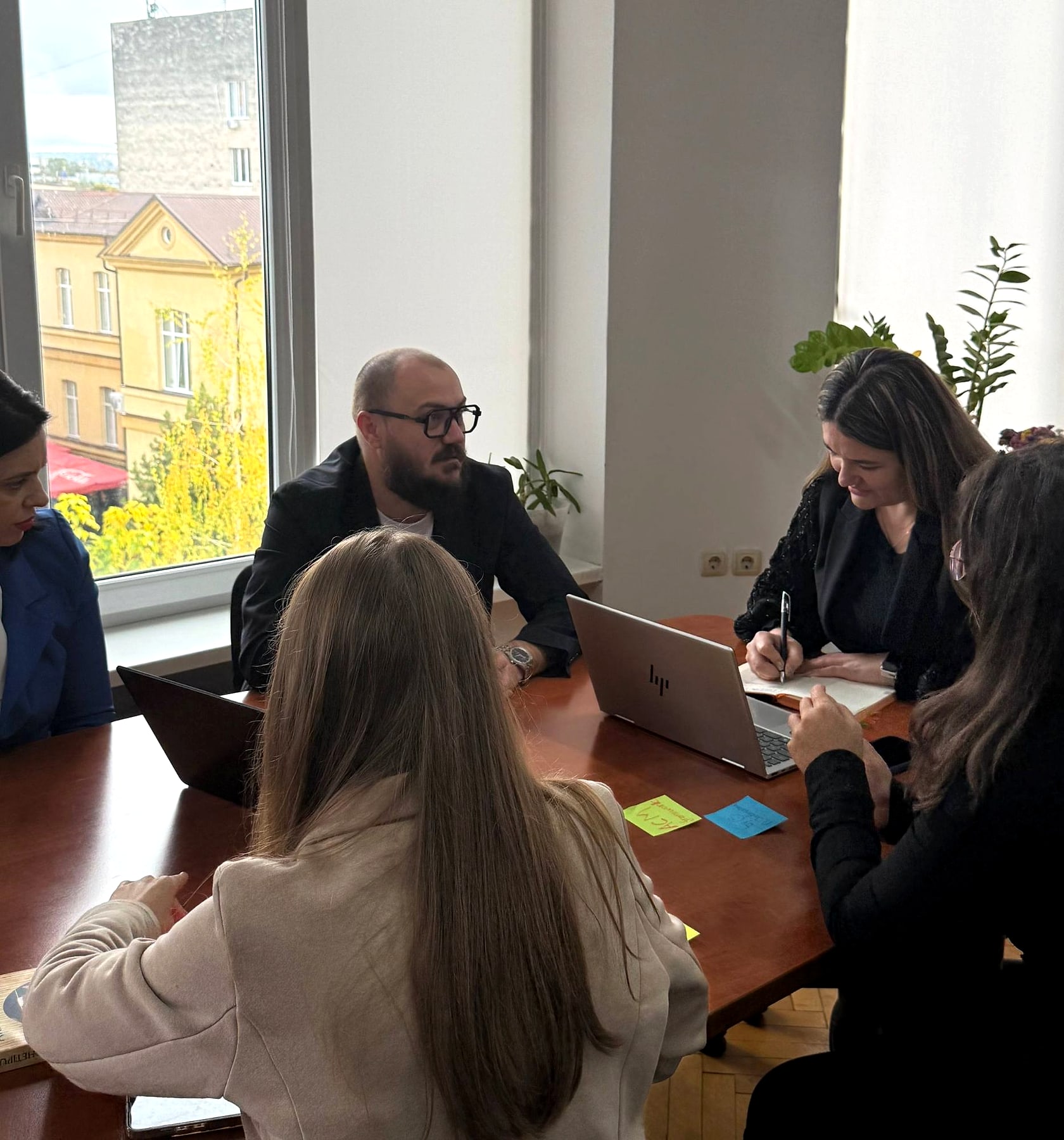
Four images of the same university, on the same 12 archetypes, and the distance between them. The faculty's launch post summed up the axes simply; here they are exactly as the instrument measures them:
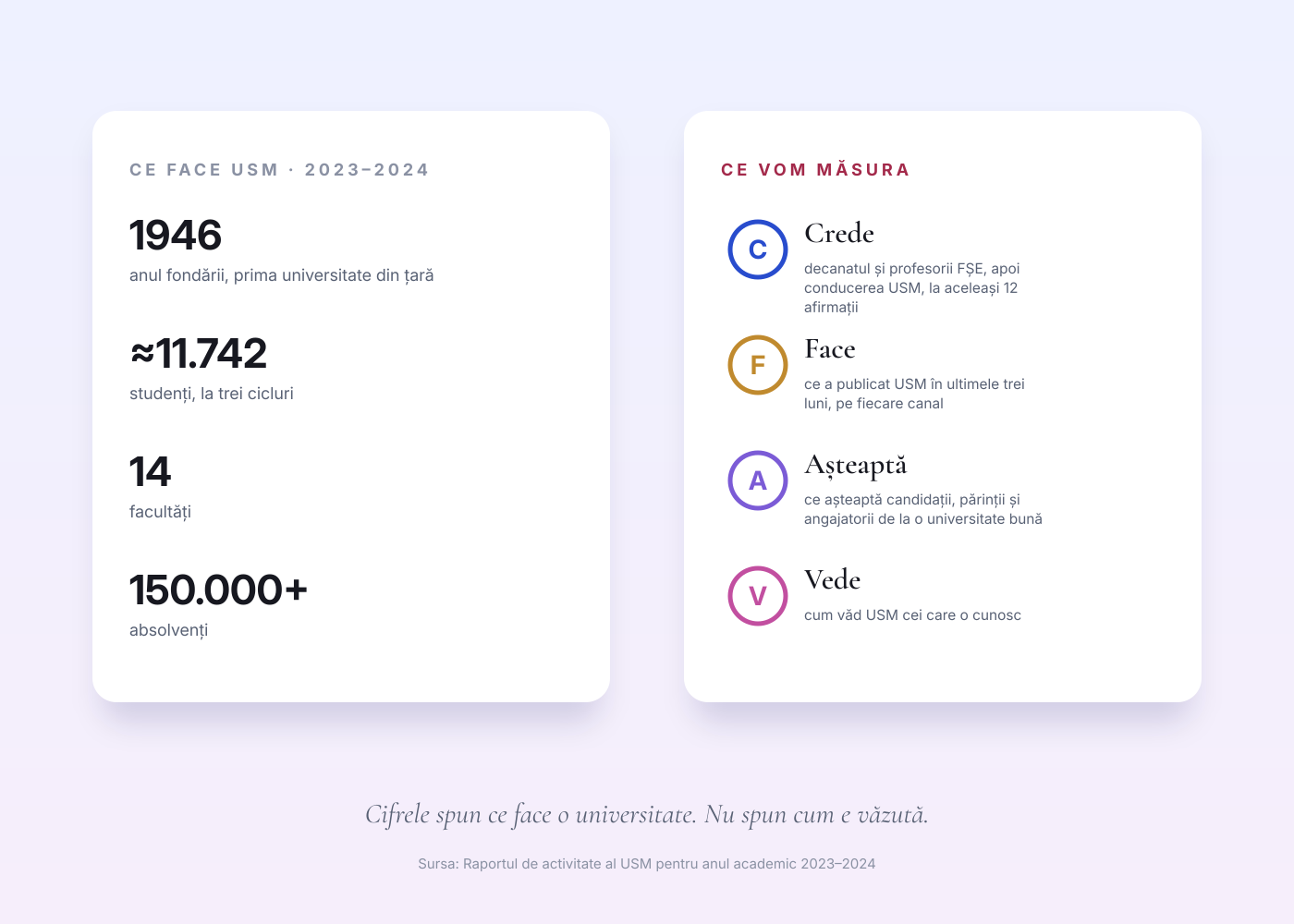
- Believes: the faculty's dean's office and lecturers, then USM leadership, each answer the same 12 statements about the brand separately; the shared profile comes from them.
- Does: we code what USM published in the last three months, on each channel, from the website to social media.
- Expects: we ask the public what they expect from a good university, before USM is mentioned.
- Sees: we ask those who know USM how they see it, on the same 12 archetypes.
The four profiles give six distances. They show whether what the university believes reaches what it publishes, whether what it publishes reaches people, and whether people get what they expect from a university. The result is a snapshot with figures anyone can check, not a grade.
05Why start with one faculty rather than the whole university?
Because a large university is a family of brands: each faculty has its own channels, its own lecturers and its own applicants. By starting with the Faculty of Economic Sciences, the group works first where it has direct access to people and materials. Then the same map is made for USM, and the faculty can be read next to the university: whether they speak alike, where they part and who pulls the brand in another direction.
06Can students measure their own university without flattering it?
Yes, if the roles are kept apart. The master's students do not answer as the public: they code the materials and run the surveys, while the answers come from leadership, applicants, parents, employers and people who know USM. A second coder checks the coding independently, and their agreement is a figure with a threshold, explained in the article on inter-coder agreement. The instrument is published in advance, so nobody can bend the rules to fit the result. The roles in the group are the same as at Repromed, the group's first brand.
07What does USM get at the end?
The brand's baseline snapshot: the four profiles, the six distances and a diagnosis read by the group with the lecturer, presented to the faculty's leadership with recommendations. Because the measurement has the same form in every wave, the university can repeat it a few months later to see what has moved. For the master's students it is a project on a real brand, with a method professionals also use, whose result stays with someone.
How long does group SMK260's project at USM last?
One semester, like any ACM Education project. The first round takes place at the Faculty of Economic Sciences, the second at USM level, and the baseline snapshot is presented at the end.
Will the results of the USM measurement be published?
Only with the university's consent. This article describes how the measurement starts, not what comes out of it; the brand's figures become public only if USM decides so.
Can other universities measure their brand the same way?
Yes. A university can work with one of its own groups in ACM Education or start a measurement directly. The conditions are the same: people who answer, channels with materials and a public that knows the brand.
How does USM differ from Repromed, the group's first brand?
Repromed is a hospital measured from the outside; USM is the university where the group studies. That is why at USM we separate more strictly who answers and who codes, so that closeness does not turn into opinion. To see how it works, try the demo.
The pink sticky note asked: “Who are YOU?”. In a semester, the answer will have four voices: those who lead USM, its channels, those who choose it and those who know it. We will see whether they say the same thing.

About the method. The Archetypal Coherence Matrix (ACM Framework) is a brand audit framework created by Dumitru Talmazan. It measures a brand's coherence on four perspectives (what leadership believes, what the brand publishes, what customers expect from the category and what they see), all on the same 12 archetypes, and calculates six distances between them. The instrument is openly published on Zenodo (DOI 10.5281/zenodo.22926708), and the verification benchmarks were registered on OSF before data collection (DOI 10.17605/OSF.IO/6NDRB). The group's project runs in ACM Education.
Source of the figures: Moldova State University activity report for the 2023–2024 academic year. Names and photographs of people appear with their consent.