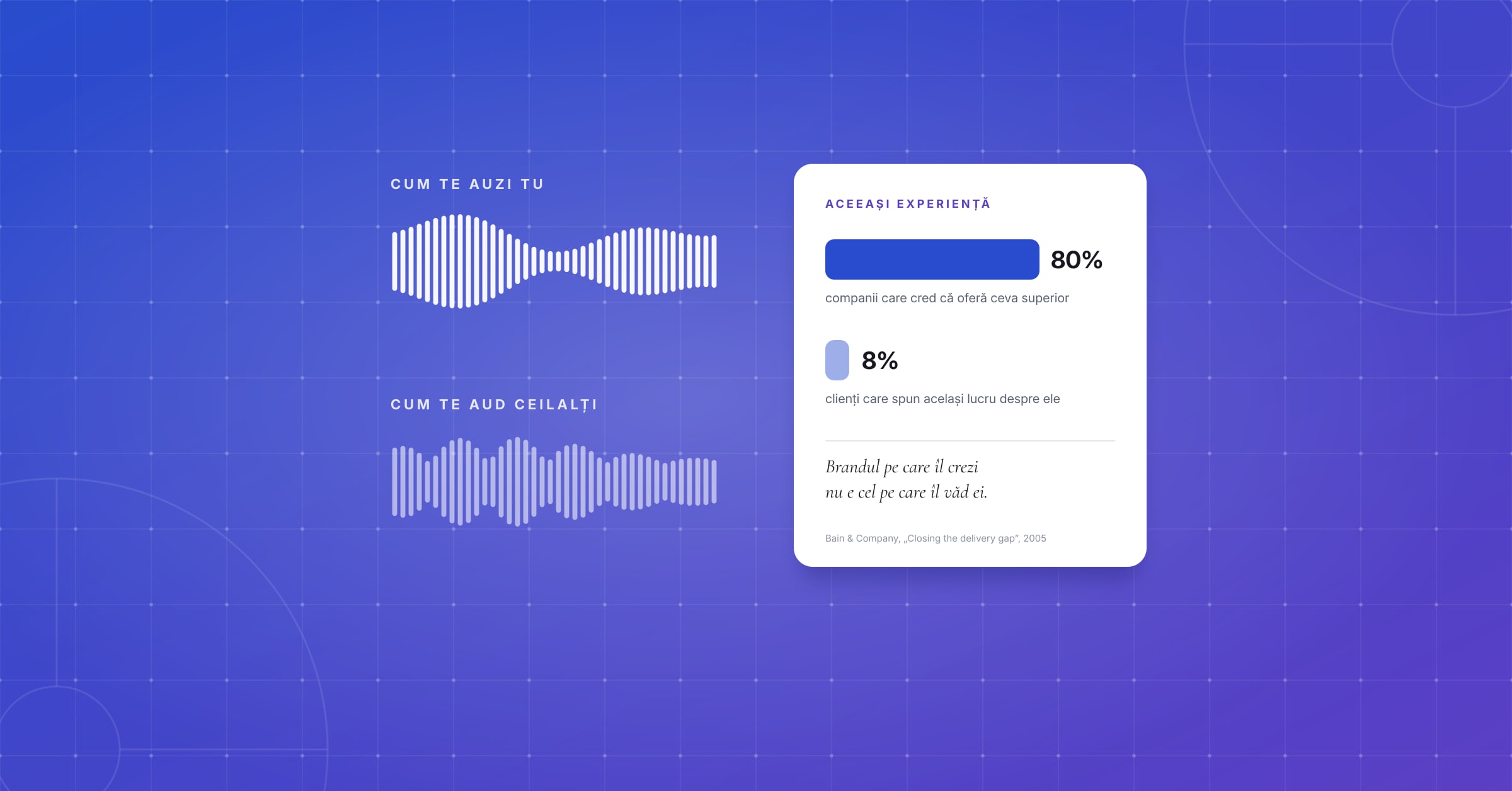
The brand you believe in isn't the one the client sees
Clients see a brand differently from the company because they look from a different place: the company from its intentions, the client from what they receive. ACM Framework puts the two pictures on the same map and shows where the road between them breaks.
Dumitru Talmazan
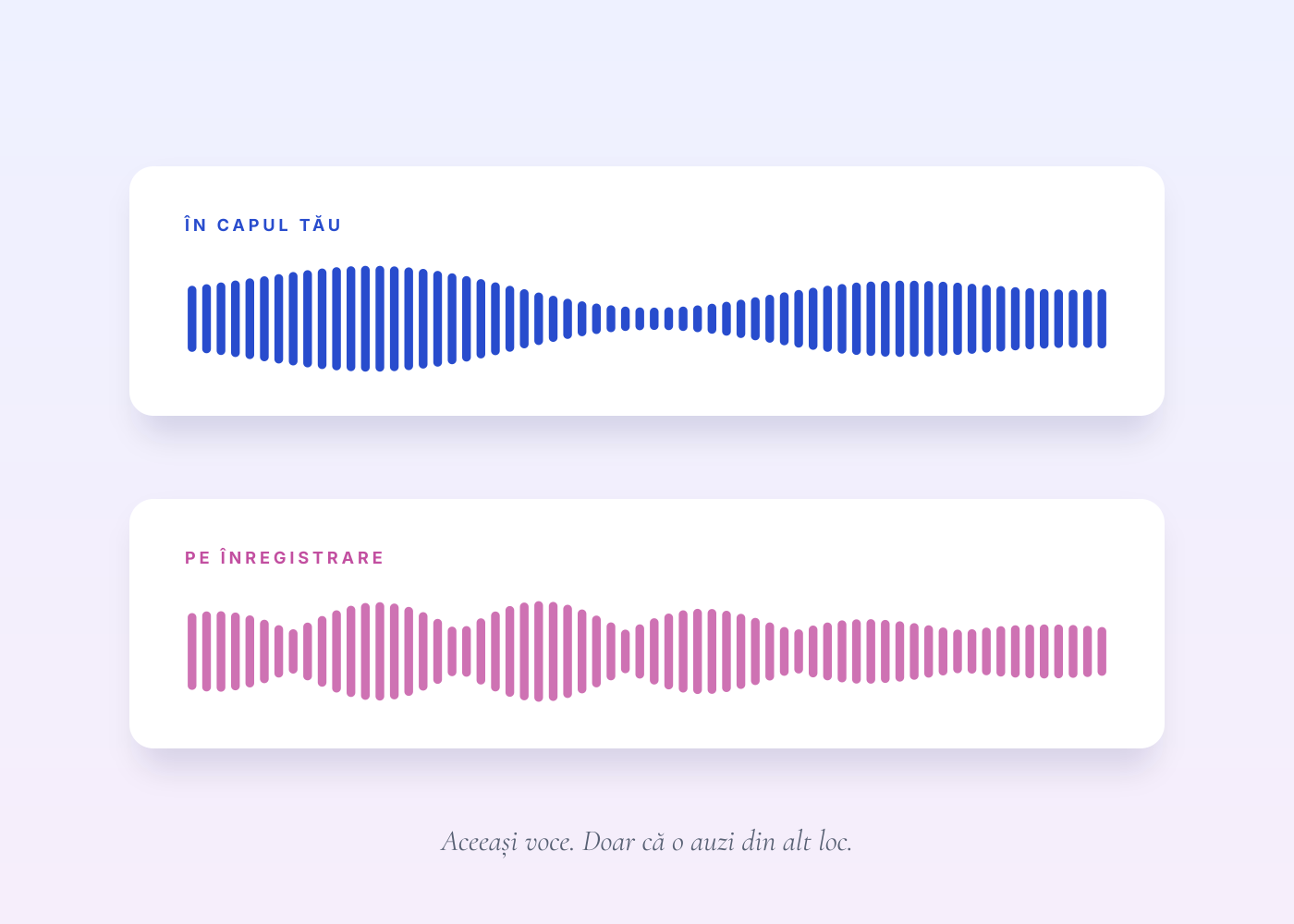
The first time I heard myself on a recording, I thought the device was broken. That thin, slightly hurried voice wasn't mine. Mine was lower, calmer; that's how I'd heard it all my life. Except that everyone else, all my life, had heard the other voice. I heard myself from the inside, through the bones of my head. They heard me through the air.
The same thing happens with brands. Management hears its brand from the inside: from plans, from intentions, from what it meant to do. The client hears it through the air: from what reaches them. And, more often than not, they're two different voices.
01Why do clients see a brand differently from the company?
Because each looks from a different place. The company sees its brand through its intentions, the client sees it through what they actually receive, and between the two the road can break in several places.
It isn't a matter of bad faith, nor of a client who doesn't understand. Management knows what it meant to say and fills in the gaps on its own. The client has only what reached them: a post, a package, a shop assistant in a hurry, a website that loads slowly.
02How big is the gap, usually?
Big. In a Bain study of 362 companies, 80% believed they delivered a superior experience, but only 8% of their clients said the same.
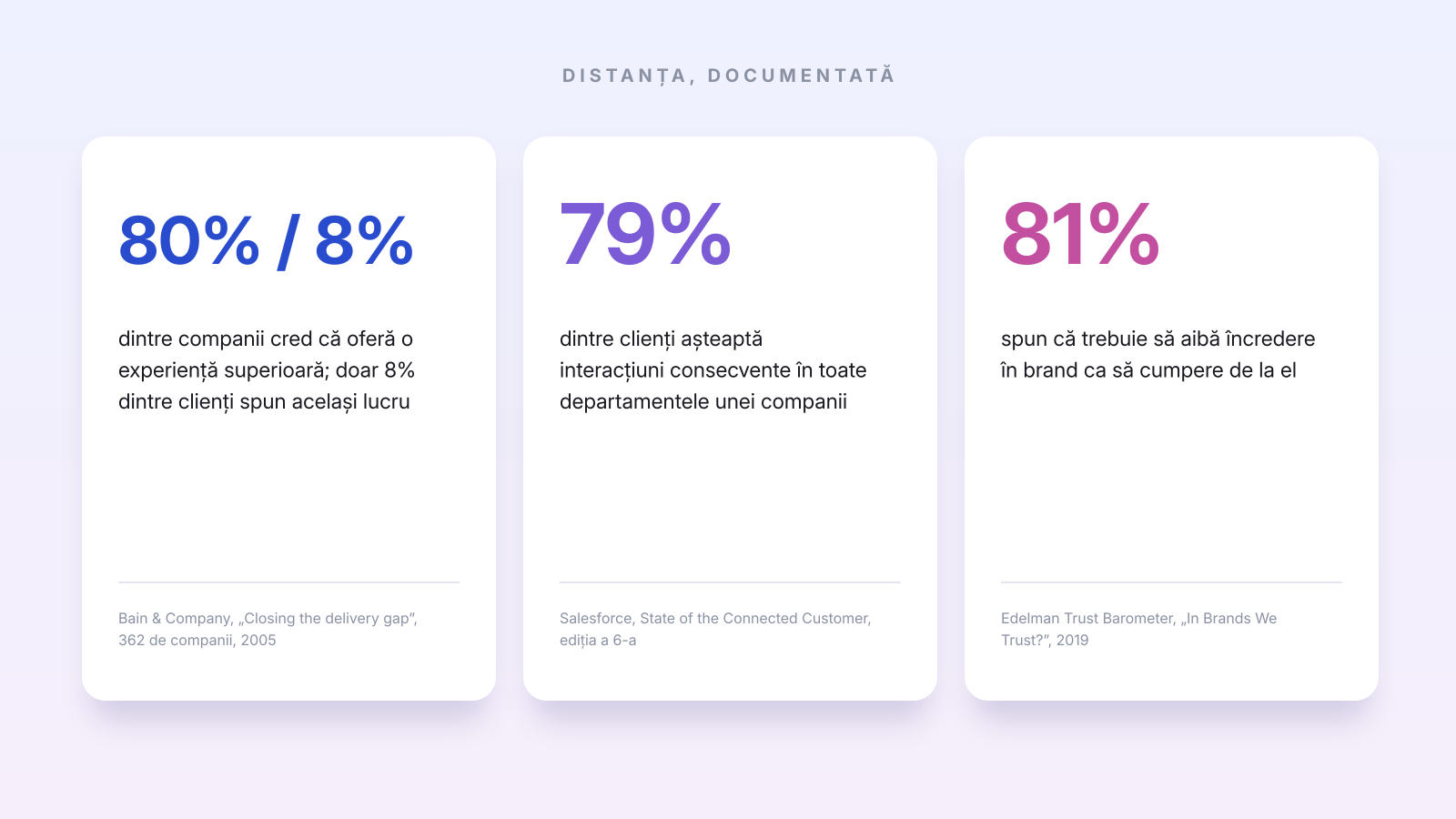
The study is almost twenty years old, but the gap hasn't closed. Today's clients, if anything, ask for more consistency: 79% expect to find the same brand across all of a company's departments, and 81% say they need to trust a brand in order to buy from it. Trust is hard to build if the brand sounds different every time.
03If the product is good, won't it be seen on its own?
Not necessarily. A good product is a condition, not a guarantee that people see it the way you do.
A brand can do things right and not be seen, because it publishes somewhere other than where people are looking. It can say one thing and do another without realising. Or it can promise something the client didn't even expect from its category. In all three cases, the product is just as good. Only the voice arrives differently.
04Isn't a satisfaction survey enough?
A satisfaction survey shows you the voice on the recording, but not the one in your head. It tells you how clients see you, not how far that is from what you intended.
To find the distance, you need both, asked in the same way. The Archetypal Coherence Matrix (ACM Framework) puts the same 12 statements to management and to clients and places them on the same map, so you can compare them side by side, not from memory.
05How do you measure the distance between what you believe and what they see?
Four pictures of the same brand are set side by side: what management believes, what the brand publishes, what the client expects from the category and what they see. The distance between the first and the last is called Mirror.
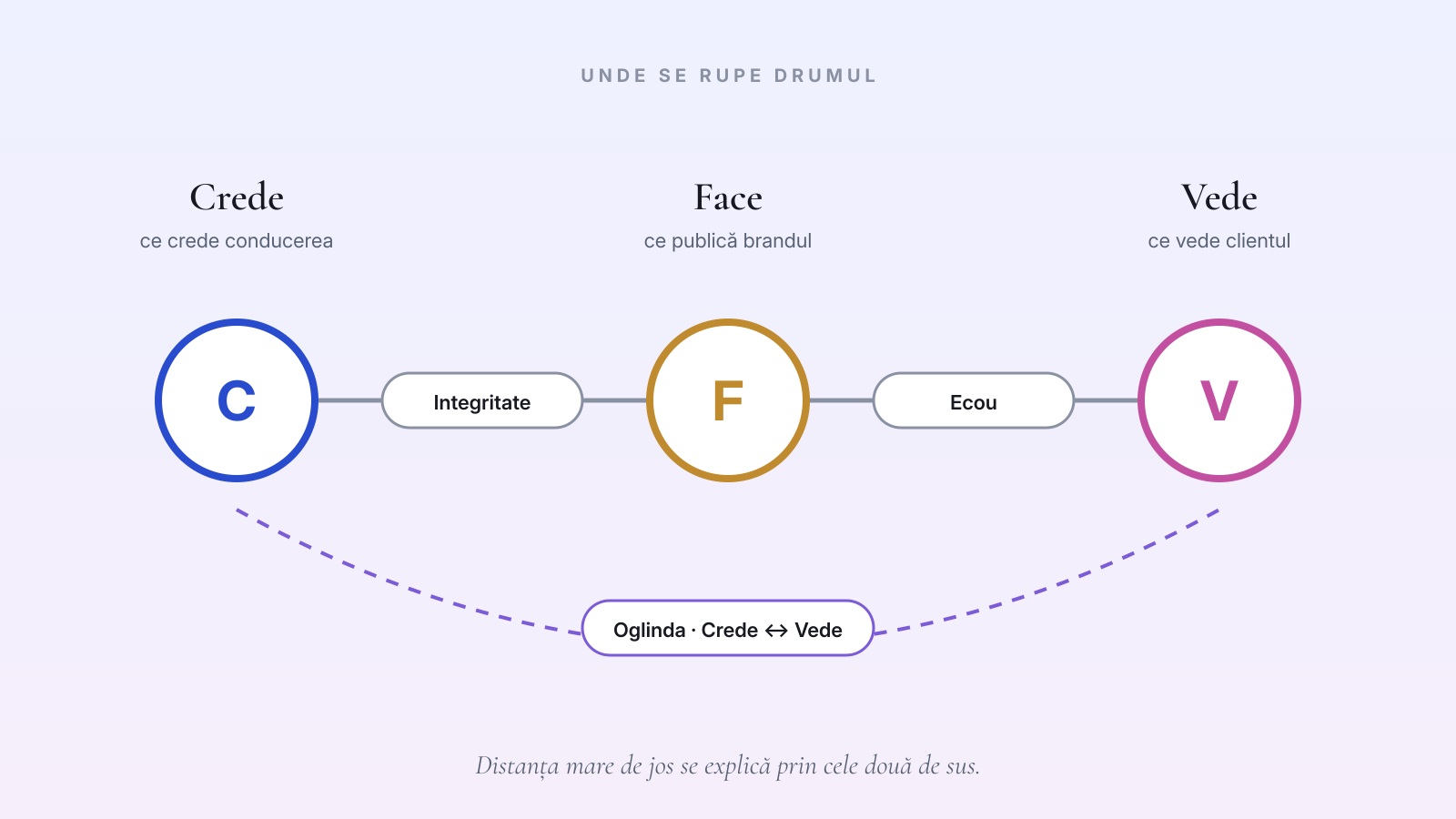
Mirror on its own only tells you that the voices differ. What makes it useful are the distances along the way. If the break is between what you believe and what you publish, the problem is in the content. If it's between what you publish and what is seen, the problem is distribution. That way you know where to fix things, not just that something isn't working.
06What do you do once you know the distance?
You show management the voice on the recording before any new campaign. Then you decide together: you change what you do, so that what you intended reaches the client, or you change what you believe, because the market has shown you something else.
Neither option is wrong. The only mistake is to carry on without knowing that you're speaking in a different voice from the one you think. And, as with any recording, it's worth listening to yourself again in a few months, to see whether anything has changed.
You can't change the voice in the bones of your head. But you can listen to the recording, once, and then speak knowing how others hear you.
About the example in this article. The recording is imaginary. The figures come from Bain & Company, “Closing the delivery gap” (2005), Salesforce, “State of the Connected Customer” (6th edition), and the Edelman Trust Barometer, “In Brands We Trust?” (2019). The perspectives and gaps come from the published ACM Framework instrument.