Mojito: a brand audit of a restaurant chain
A brand audit of a restaurant chain puts every location on the same map. Group SMK260 is measuring the Mojito brand, with three restaurants in Chișinău, using ACM Framework over one semester.
Grupa SMK260, Universitatea de Stat din Moldova
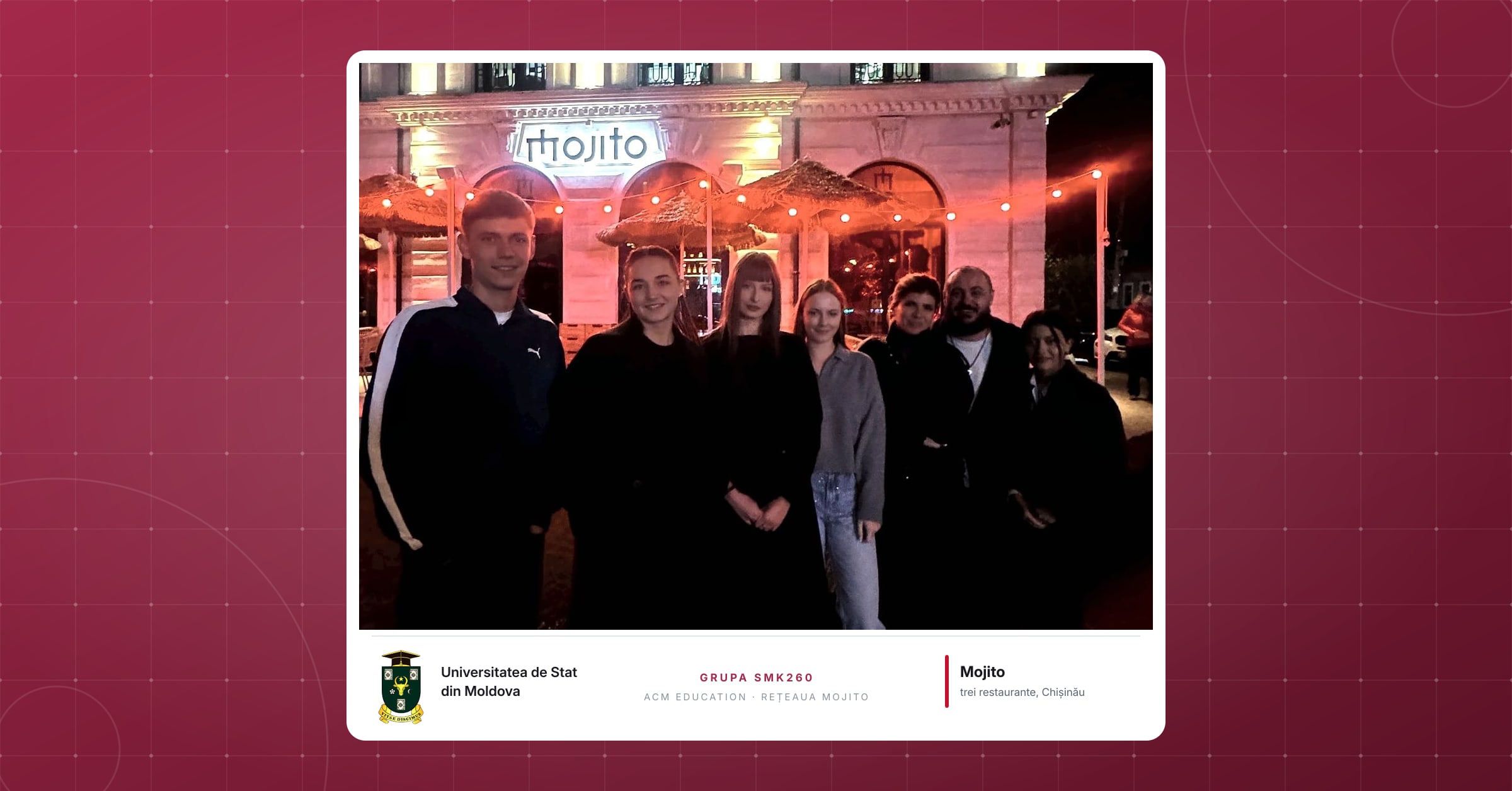
A brand audit of a restaurant chain puts every location on the same map: what leadership believes about the brand, what each channel publishes, what guests expect from a good restaurant and how they see the chain. That is how you see whether three addresses describe the same brand. Group SMK260 at Moldova State University (USM) is now applying the Archetypal Coherence Matrix (ACM Framework) to the Mojito restaurant chain in Chișinău, over one semester.
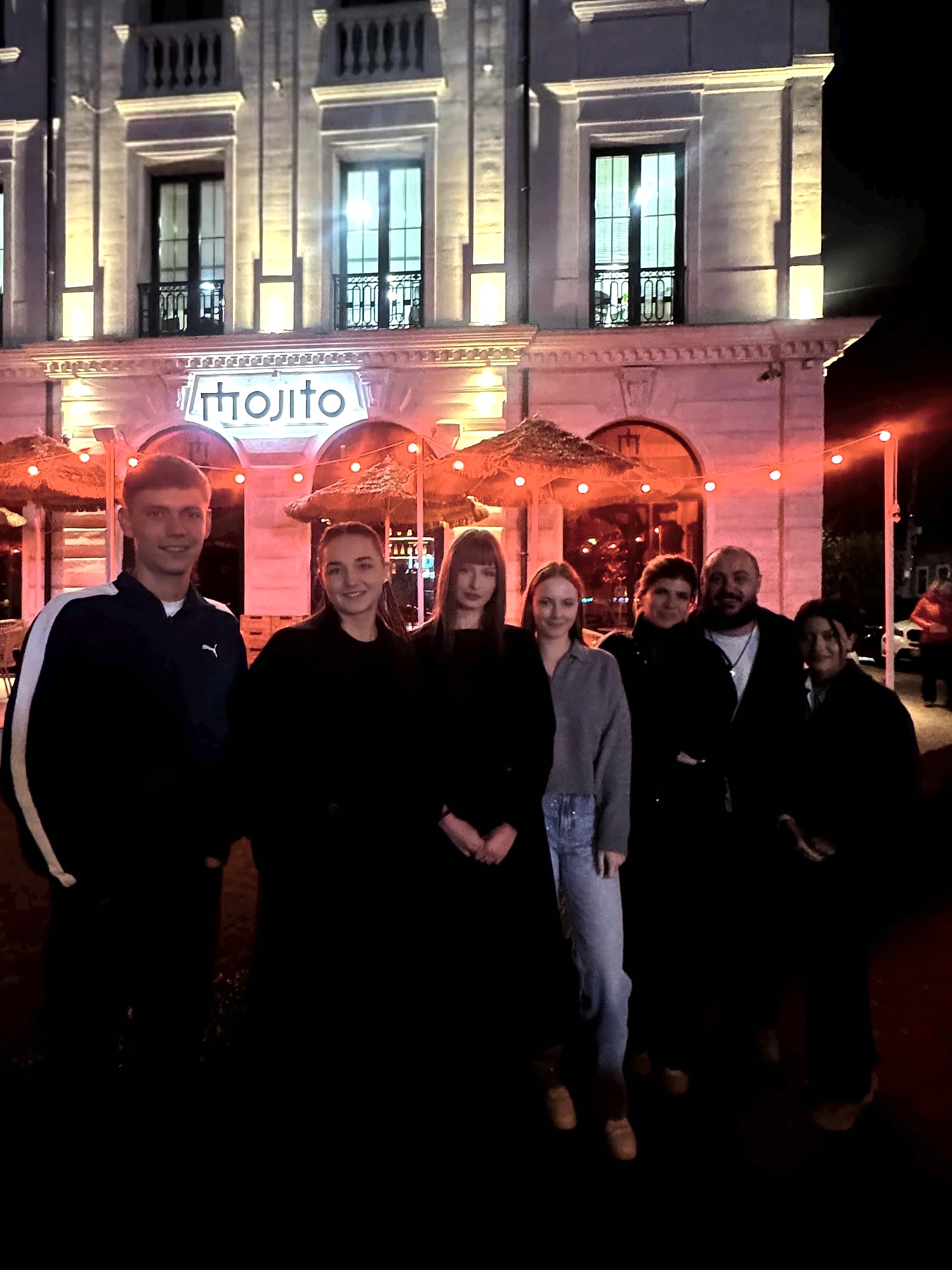
The project began at Mojito Izakaya, the chain's newest location, built on a concept inspired by Japanese culture. From the entrance, a hostess dressed in a kimono welcomes guests into the atmosphere of the place. For us, it was the first field meeting of a project in which the brand is measured, not just described.
01How do you run a brand audit of a restaurant chain?
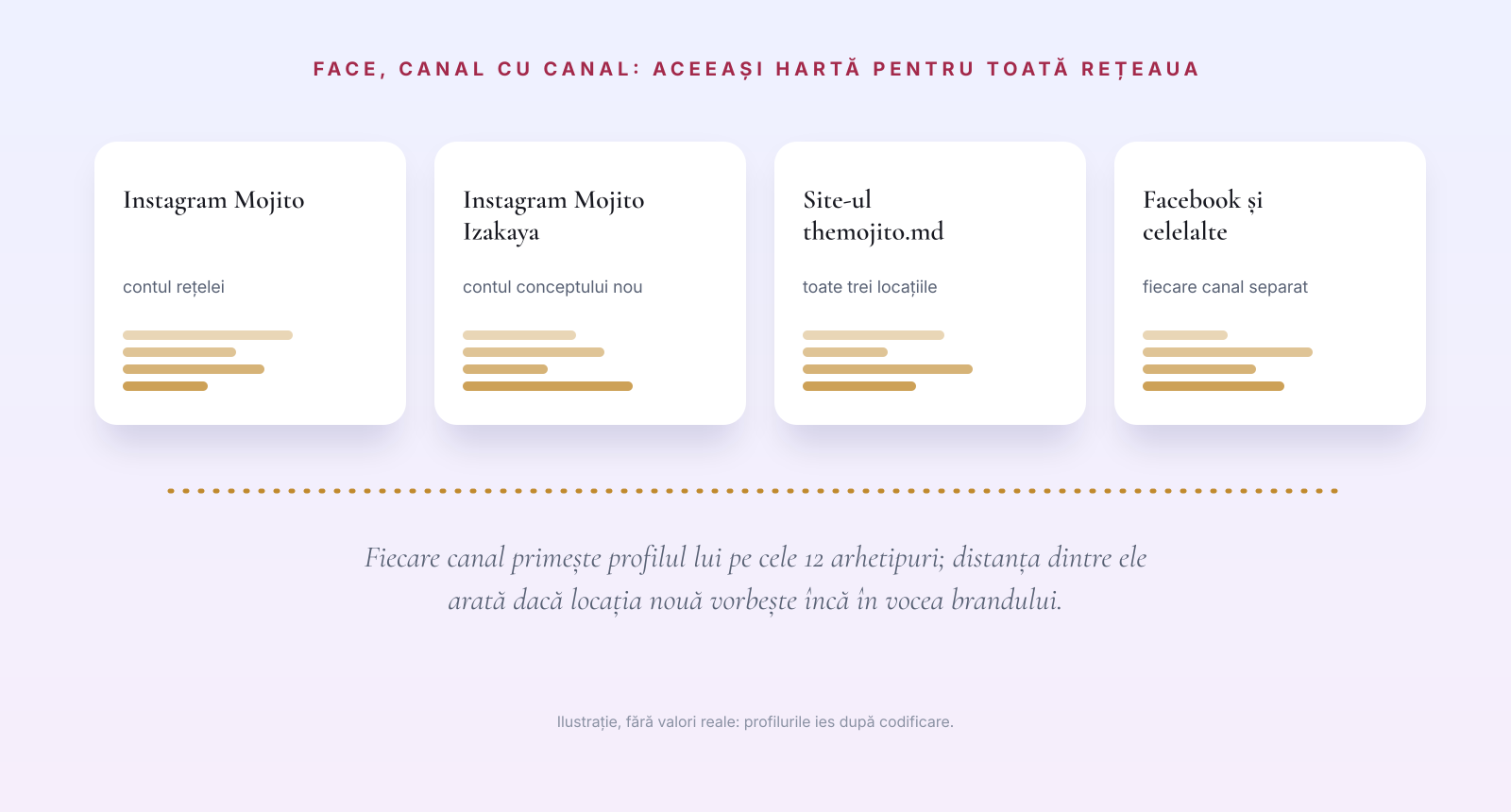
You measure the brand, not each restaurant separately, but you read every channel on its own. Leadership answers once for the whole brand; published materials are coded channel by channel, including the account of a location with its own concept; the public is asked about the category “restaurant in Chișinău”, and those who know the chain say how they see it. If a new location drifts from the brand's voice, the distance shows up on its channel.
02What is the Mojito chain?
A restaurant brand in Chișinău with three locations, according to the themojito.md website: Mojito Centru, at 152 Ștefan cel Mare și Sfânt Boulevard, open around the clock; Mojito Rîșcani, at 11/5 Moscova Boulevard; and Mojito Izakaya, at 28 Armenească Street. The website describes a menu of European and Japanese cuisine. Izakaya, the newest of the three, brings a Japanese concept into the chain.
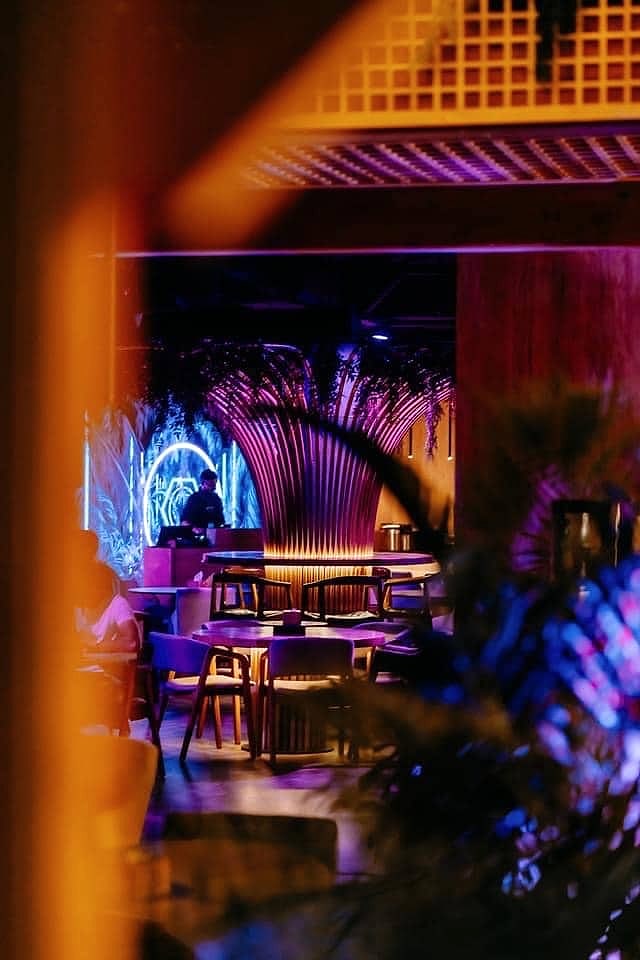
03What does izakaya mean, and why does it matter for the brand?
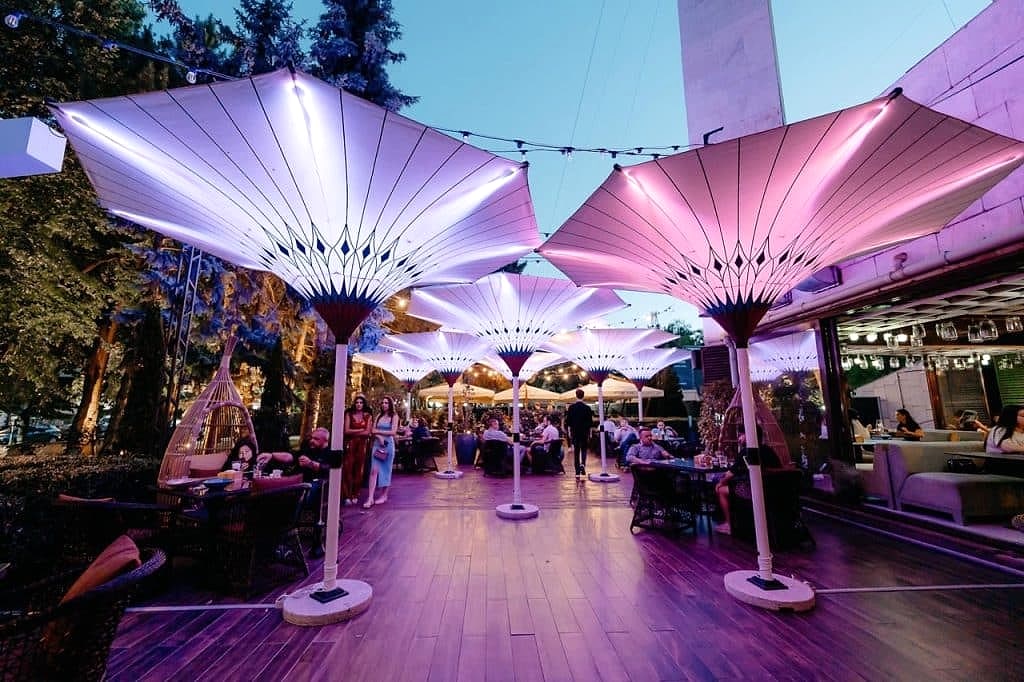
In Japan, an izakaya is an informal place where people meet to eat and drink together in a relaxed atmosphere. Unlike a classic restaurant, the focus is on time spent together, on a variety of dishes and on atmosphere. Mojito Izakaya takes the idea into a contemporary space and blends it with Mojito's identity. For the brand, that means a question to measure: how far can a new location move from the rest of the chain and still be Mojito?
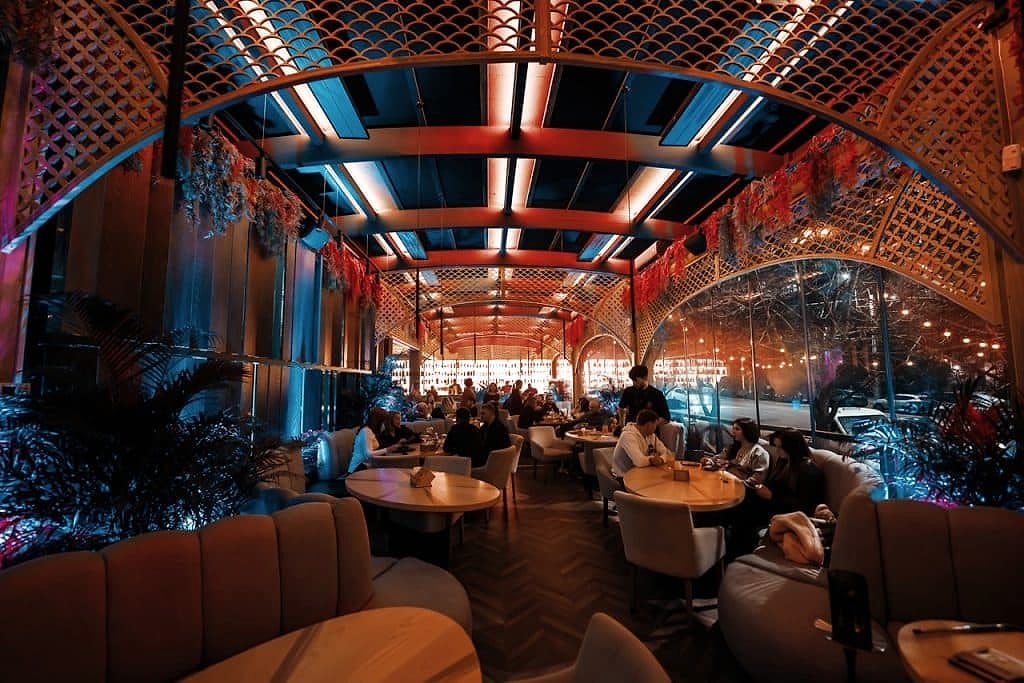
04What did we learn from the Mojito team?
We talked with Ms Paula Elisei, from the Mojito team, who will support the group throughout the project. We learned how the location's concept was built, how the guest experience is designed and what challenges arise when a brand launches a new concept. We also saw how much of a brand lives in details: in how a guest is greeted, in the interior, the menu, the way dishes are presented and the people on the floor, who are a form of communication too.
05What will we measure at Mojito?
Four images of the same brand, on the same 12 archetypes. We call them the four perspectives of a brand:
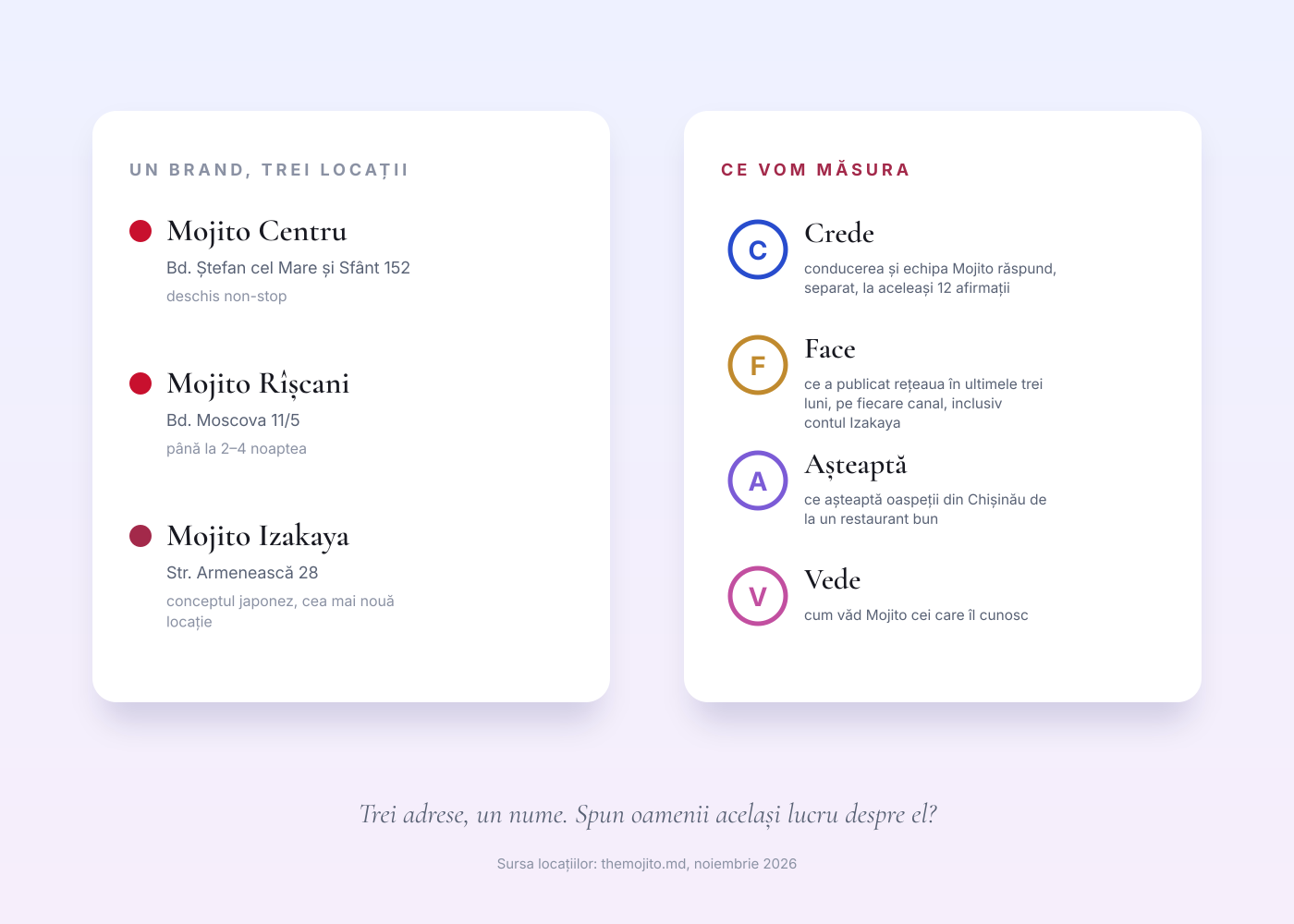
- Believes: Mojito's leadership and team each answer the same 12 statements about the brand separately; the shared profile comes from them.
- Does: we code what the chain published in the last three months, channel by channel, including the Mojito Izakaya account.
- Expects: we ask people in Chișinău what they expect from a good restaurant, before any name is mentioned.
- Sees: we ask those who know Mojito how they see it, on the same 12 archetypes.
Compared two at a time, the four perspectives give six distances. They show whether what leadership believes reaches what the chain publishes, whether what it publishes reaches guests, and whether guests get what they expect from a good restaurant. It is not a grade: it is a snapshot with checkable figures.
06Is Mojito still the same brand across three locations?
That is this project's own question. A location with a new concept can be deliberate differentiation or a break from the brand, and from the outside the two look the same. On the map they separate: each channel gets its own profile on the 12 archetypes, and the distance between the Izakaya channel and the rest of the chain shows whether the new location still speaks in the brand's voice. Being coherent does not mean being identical everywhere, as the article on a brand across 20 channels explains.
07Who does what in group SMK260?
The group works in roles, as at Repromed, the group's first brand: a coordinator keeps in touch with Mojito, one coder reads all the published materials, a second independently checks part of them, and the rest of the team gathers materials and prepares the survey. The Mojito team opens access to the channels and takes part in the session where leadership chooses its primary archetype. The lecturer follows progress and corrects the coding where the coders disagree.
08What does Mojito get at the end?
The brand's baseline snapshot: four profiles, six distances and a diagnosis read by the group to leadership, with recommendations, including on the place of the Izakaya concept within the chain. The measured brand can be taken over in ACM Marketing, and a re-measurement a few months later shows what has moved. For us, the students, it is a real brand and a result that stays with someone.
09What will the measurement not tell us?
It does not judge the taste of the dishes, the service or the prices, and it does not replace guests' reviews. It only measures whether the image Mojito has of itself, the one it publishes and the one guests hold describe the same brand.
Can each location be measured separately?
On Does, yes: each channel, including a location's account, gets its own profile. Believes and Sees are measured for the brand, because people describe Mojito, not a particular address.
How long does a brand audit with a group of master's students take?
One semester. The field meeting opens the project; then come the leadership survey, the coding of materials and the public survey, and at the end the group presents the brand's baseline snapshot.
Can another restaurant run the same audit?
Yes, with a student group in ACM Education or directly in ACM Marketing. The conditions are the same: leaders who answer, channels with materials and guests who know the brand. To see how it works, try the demo.
We left the classroom to see a brand in action: a hostess in a kimono, a lit terrace, a menu that travels from Europe to Japan. Over the coming months we will measure whether all of it tells the same story.
About the method. The Archetypal Coherence Matrix (ACM Framework) is a brand audit framework created by Dumitru Talmazan. It measures a brand's coherence on four perspectives (what leadership believes, what the brand publishes, what customers expect from the category and what they see), all on the same 12 archetypes, and calculates six distances between them. The instrument is openly published on Zenodo (DOI 10.5281/zenodo.22926708), and the verification benchmarks were registered on OSF before data collection (DOI 10.17605/OSF.IO/6NDRB). The group's project runs in ACM Education.
Source on the chain: the themojito.md website, read on 1 November 2026. Photos of the locations: Mojito. Names and photographs of people appear with their consent.