What ACM Framework is not: archetype, personality, fit
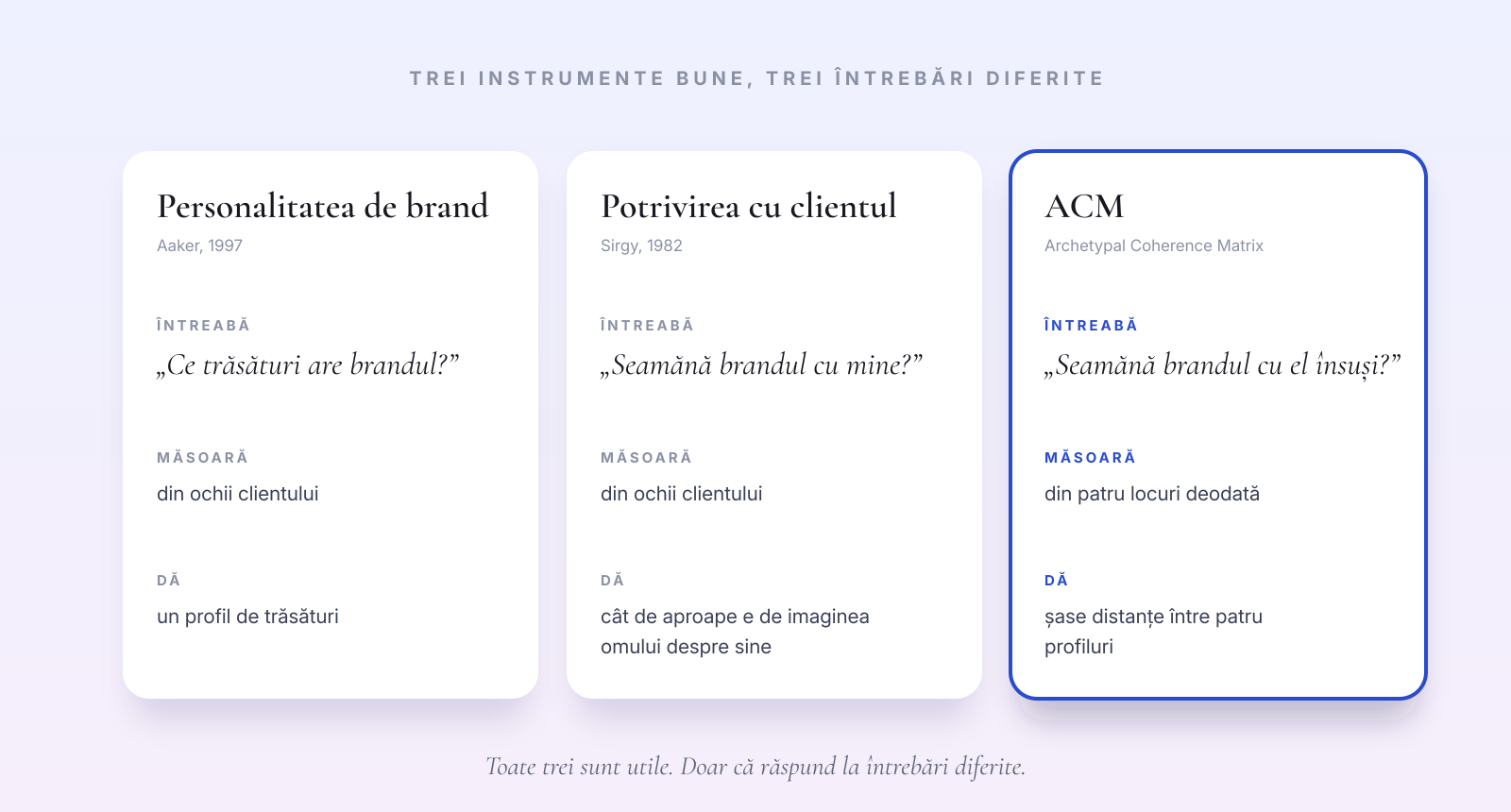
ACM Framework does not choose your archetype, it is not a brand personality test, and it does not measure how much the brand resembles the customer. It measures whether the brand resembles itself, seen from four places, and whether the declared archetype is the one actually lived.
Dumitru Talmazan
I’m sitting on a plastic chair in a neighbourhood car repair shop. It smells of oil, and the radio is always on the same station. On the wall behind the reception desk, after a branding course, the owner has painted one word: “Ruler”. I asked him what it meant. He told me that’s what the test said.
01What isn’t the Archetypal Coherence Matrix (ACM Framework)?
ACM Framework does not choose your archetype, it is not a brand personality test, and it does not measure how much the brand resembles the customer. It measures whether the brand resembles itself, seen from four places.
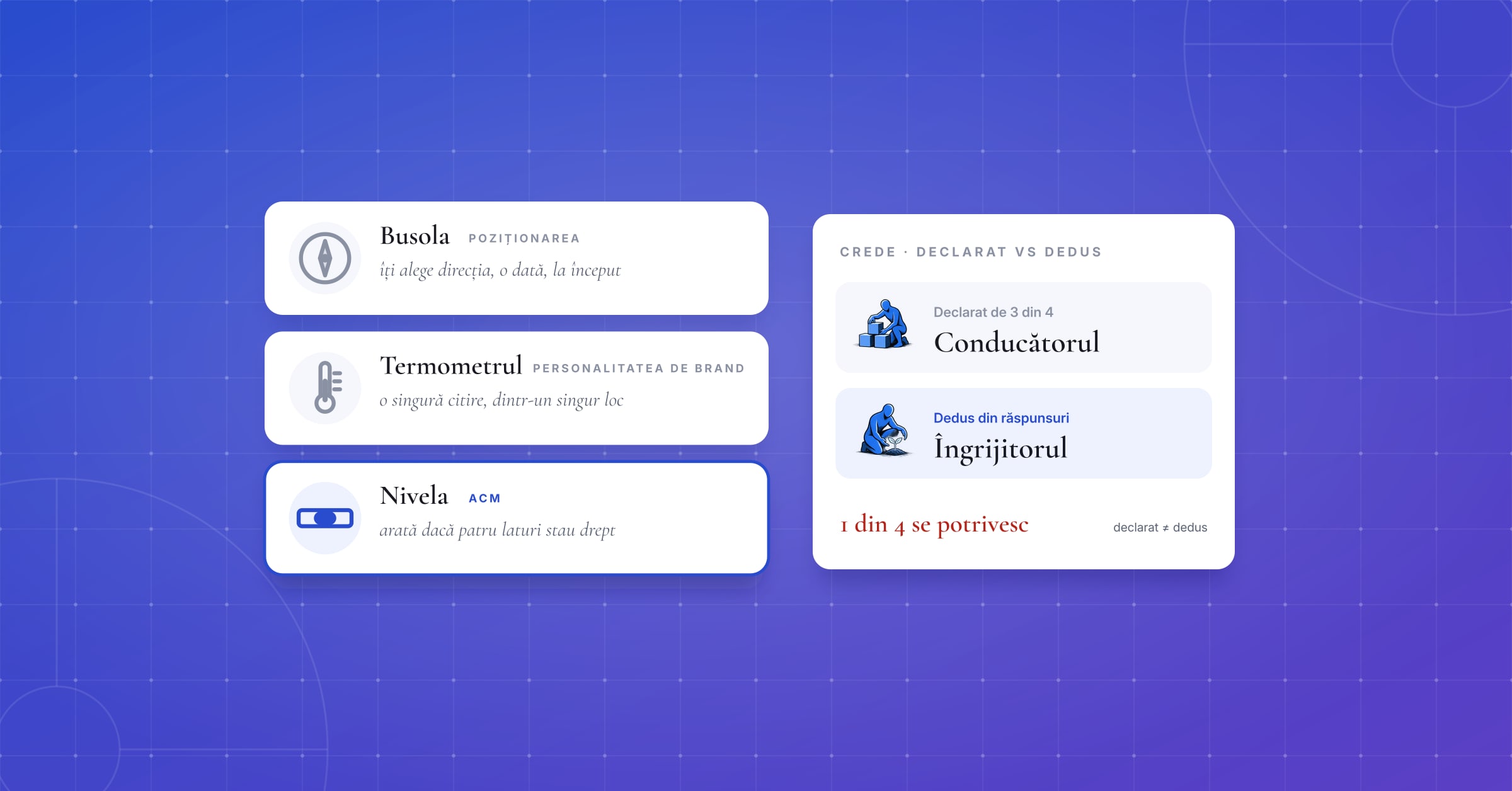
I look around the workshop. Every tool in it answers a single question. The compass tells you where to go. The thermometer gives you one reading, from one place. The spirit level tells you whether what you have built is straight. None of them is better than the others. But if you use the thermometer to check whether the shelf is straight, you will get a perfect answer to a question you never asked.
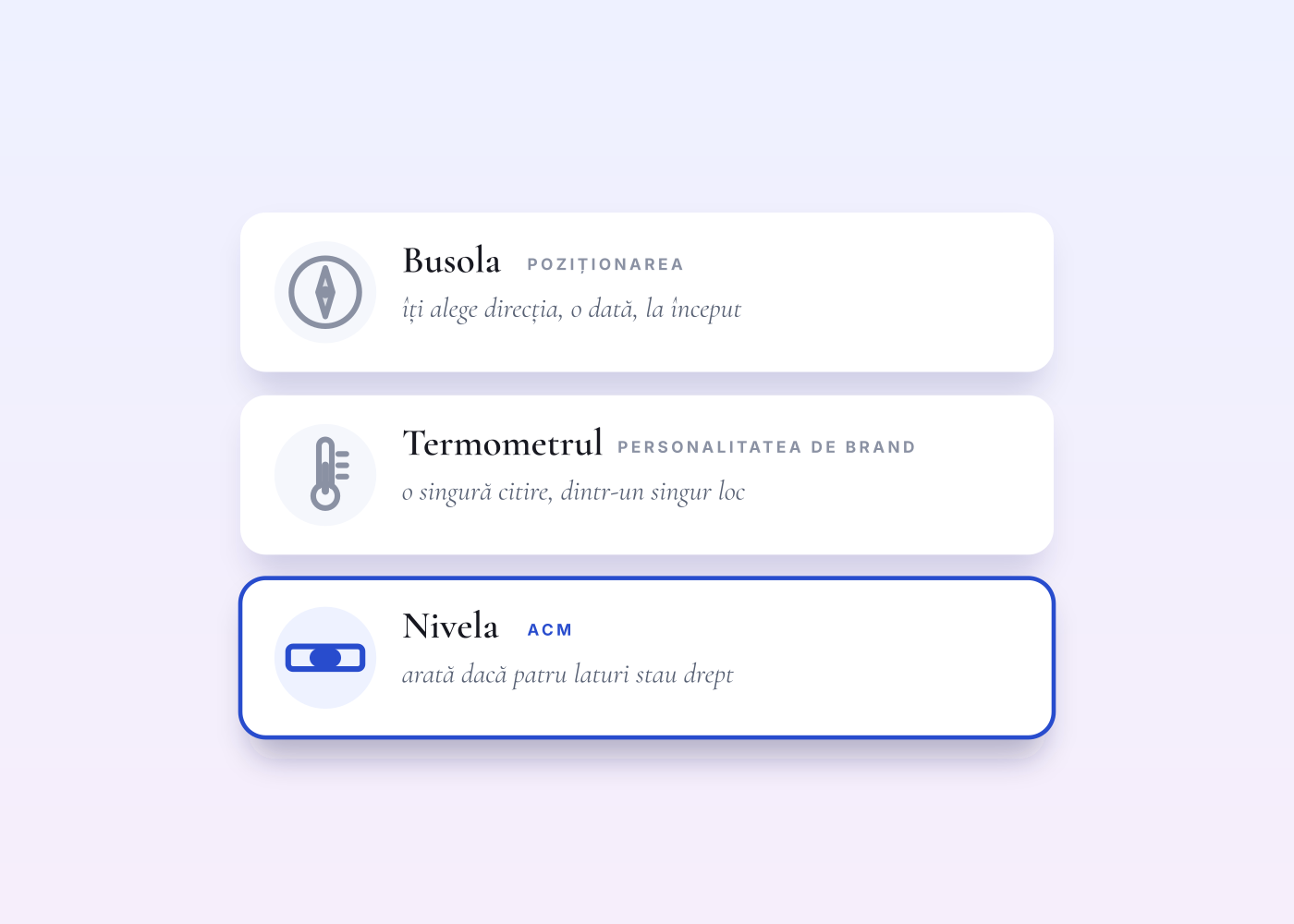
ACM Framework is the spirit level. It doesn’t tell you what to build. It tells you whether what you have built is straight.
02Does ACM Framework choose my brand’s archetype?
No. Positioning chooses it, once, at the start. ACM Framework comes afterwards and asks a different question: the archetype you chose, are you living it?
The first myth is also the most common. People come hoping a tool will tell them who they are. The owner of the repair shop got a word at a course and put it on the wall. It was a good step, because he chose something. But choosing is only half the way. The other half is seeing whether the people in the shop, what you publish and what your customers feel all point to the same word.
It is the difference between choosing what you want to be and checking whether you are. ACM Framework stays out of the first. It deals only with the second.
03What does ACM Framework show about the archetype you declared?
It shows whether the archetype management names is the same as the one that emerges from its own answers. On the platform, this is the “Declared vs inferred” card.
Each member of management first answers the 12 statements and describes the brand freely, as if it were a person. Only at the end do they choose, from a neutral, shuffled list, the archetype that most resembles the brand. They can also choose “Hard to say”. This order exists so that the choice does not influence the answers.
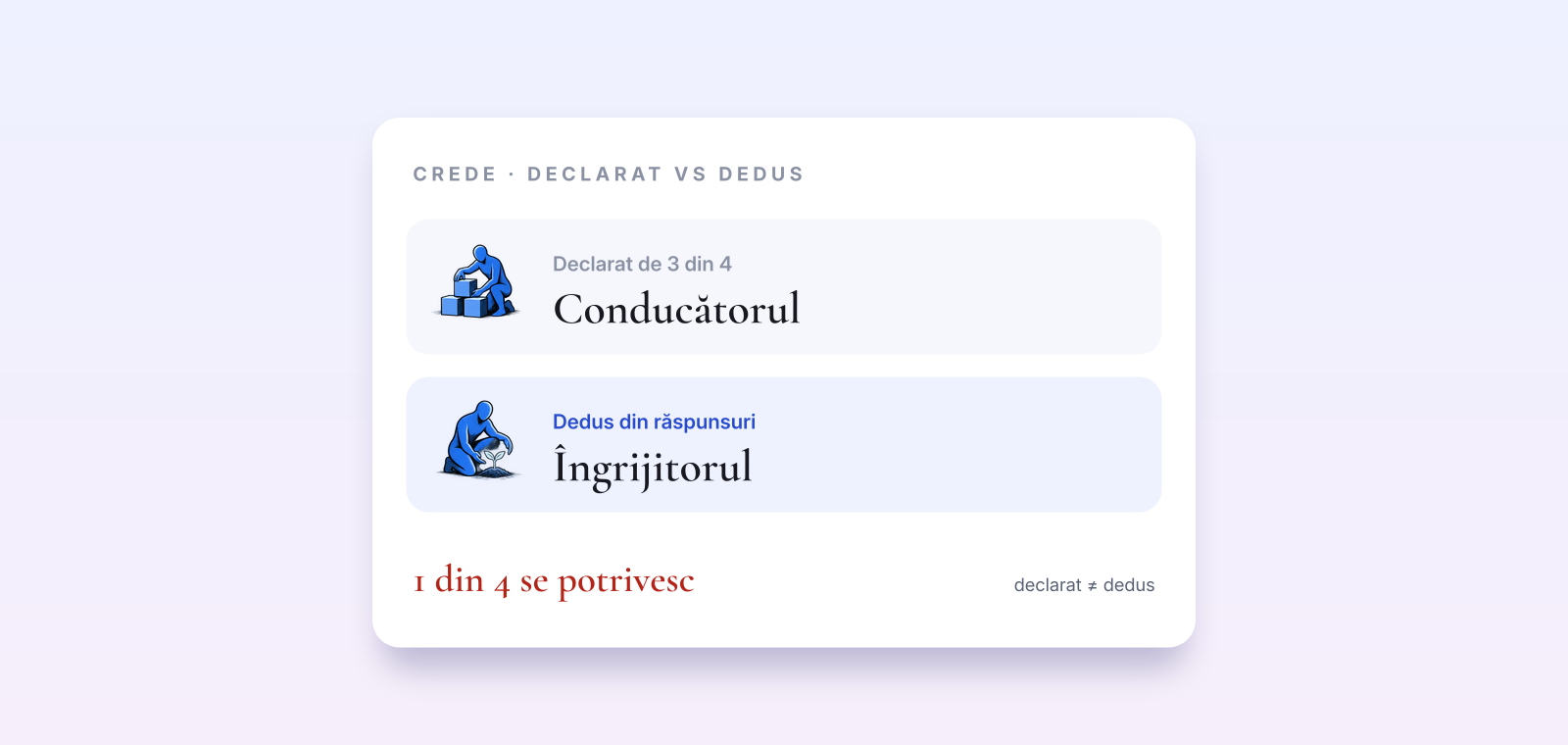
At the repair shop, three people out of four chose the Ruler, just like the wall. But when they answered the statements, they gave their highest scores to “cares for people”. The head mechanic, for example, calls every customer the day after a repair to ask whether the car is running well. That is not a Ruler. That is a Caregiver, and a very good one.
When declared and inferred don’t match, the platform doesn’t decide for you. It puts the question plainly: what is true, the word on the wall or the way you work? Whatever the answer, it is a decision, and it is made by the people who run the brand.
04Is ACM Framework a brand personality test?
No. Brand personality describes the brand through traits, such as sincere, daring or competent, and measures them from a single place, usually through the customer’s eyes. ACM Framework measures from four places at once, and what it cares about is not the profile but the distance between profiles.
The second myth comes from the fact that both talk about character. But a thermometer and a spirit level can sit on the same table without doing the same job. A brand can have a very clear personality and, at the same time, very weak coherence. The customer sees it clearly; it just isn’t the brand management believes in, nor the one it publishes.
05Does ACM Framework measure how much the brand resembles the customer?
No. That is the question of customer fit, researched for more than forty years: does the brand resemble me? ACM Framework asks something else: does the brand resemble itself?
The third myth is the subtlest. The customer does appear in ACM Framework, twice, through Expects and Sees. But there the customer is not a mirror in which the brand compares itself with the person. It is a window through which the brand is seen. A repair shop can resemble its customers perfectly and still say one thing and do another.
06When do you use ACM Framework, and when something else?
You use ACM Framework after you have chosen who you want the brand to be, to see whether it becomes that everywhere. For the choice itself, you need positioning. For how the customer describes you, brand personality studies. For the fit with the customer’s image of themselves, fit studies.
- Choose the direction: positioning, the archetype you want to live.
- Check whether it stands straight: ACM Framework, from four places, with the six gaps.
- Read the “Declared vs inferred” card and decide what is true.
- Measure again after you change something, to see whether the level has straightened.
For the repair shop in the story, perhaps the most honest decision is to paint over the word on the wall and write another. Not because the course was wrong, but because his people have built, without realising it, something better than the test told them.
“We are a Hero brand”, “we are a Sage”: I hear this a lot, and it almost always comes from a test or a workshop. It is a good start, a compass. But a compass doesn’t tell you whether the shelf is straight. For that you need a spirit level, and the level looks at what you do, not at what you chose.
About the example in this article. The car repair shop and its people are imaginary. The order of the questions in the management survey and the “Declared vs inferred” card come from the published ACM Framework instrument and from the platform. Brand personality is described after Aaker (1997), and customer fit after Sirgy (1982).